Every plumbing system has a lifespan, and in Moreno Valley's older neighborhoods -- Sunnymead, Edgemont, and the tracts built in the 1970s and 1980s -- many homes are approaching or past that threshold. Hard water accelerates pipe corrosion faster than in most California regions, meaning pipes that might last 50 years elsewhere can show failure signs in 30-35 years here. When leaks, low pressure, and discolored water become routine, a repipe is often the most cost-effective solution.
This guide explains the signs that indicate a whole-home or partial repipe is warranted, the piping material options available today, and what homeowners can expect from the process. If your home has recurring pipe problems, call Moreno Valley Plumbing Pros at (207) 419-2600 -- we offer free consultations on repiping and can assess your system the same day when available.
How Long Do Pipes Last?
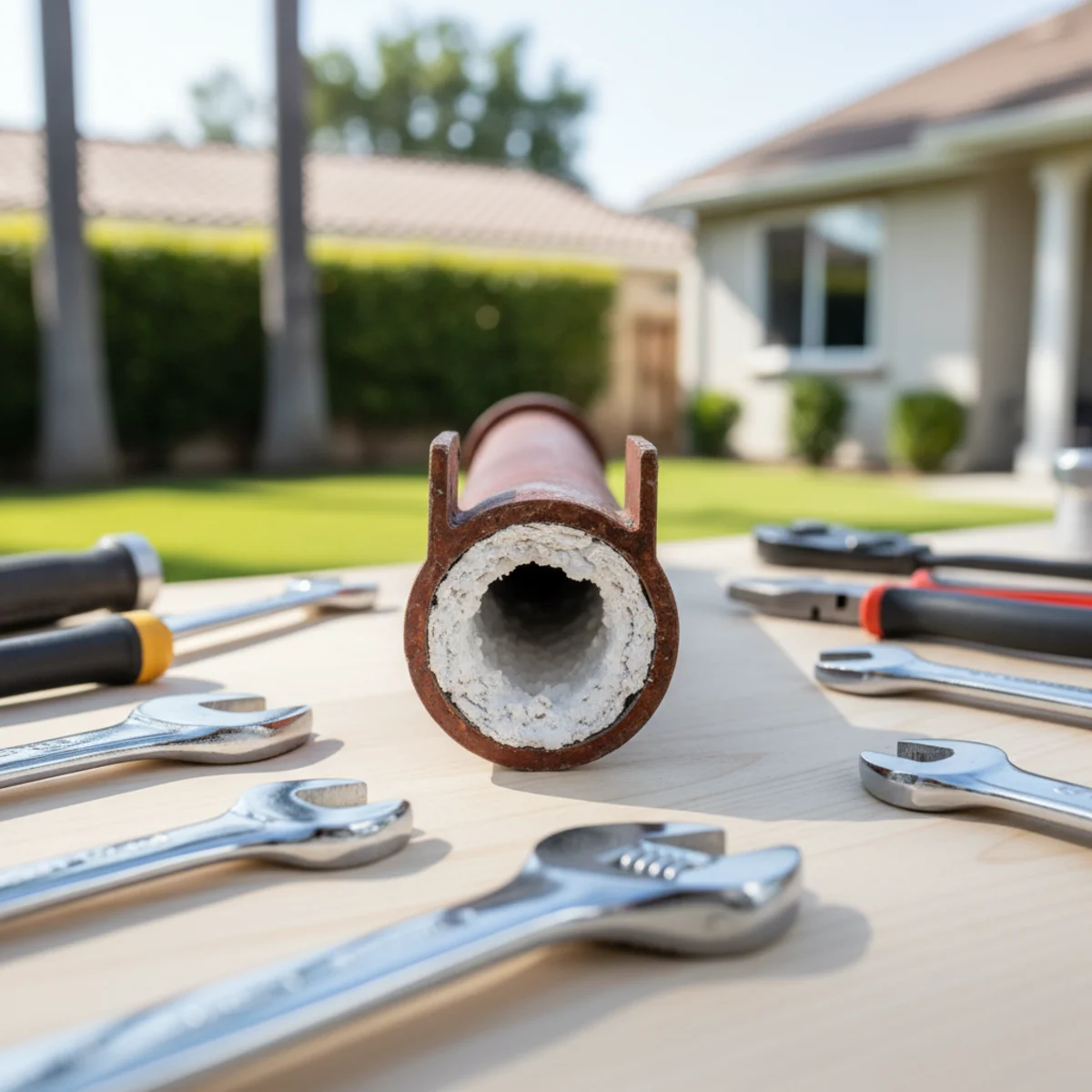
Pipe lifespan depends heavily on the material and the water chemistry they are exposed to. In the hard-water environment of Moreno Valley, expect these typical ranges: galvanized steel pipe lasts 20-50 years, but it corrodes from the inside out and many homes built before 1980 with original galvanized pipe are well past safe operating age. Copper pipe typically lasts 50-70 years in average conditions, but hard water pitting corrosion in Moreno Valley can reduce that to 30-40 years for the oldest installations. PEX (cross-linked polyethylene), the modern standard for residential repiping, has an expected lifespan of 50 years or more and is largely immune to the corrosion problems that affect copper.
Local tip: If your home was built before 1985 and has never had a plumbing assessment, you may be living with pipe that is already past its expected service life.
Signs You Need a Repipe
The clearest sign that a repipe is warranted is recurring leaks -- particularly when they appear at different locations throughout the home over a short period. One isolated pinhole leak can be a one-off event. Three or four in different places within a year or two is a sign the entire system is at the same stage of corrosion.
Other strong indicators include persistently low water pressure that was not always this bad (scale buildup inside corroded pipe reduces interior diameter over time), discolored water -- brown or rust-colored at the tap -- especially first thing in the morning, and a metallic taste in the tap water. If your home has polybutylene pipe (a gray plastic pipe used from roughly 1978-1995), replacement is strongly recommended regardless of current leak status, as this material has a well-documented history of failure.
- Multiple leaks in different locations within 12-24 months
- Chronic low water pressure throughout the home
- Rusty or discolored water, especially in the morning
- Metallic taste in unfiltered tap water
- Visible pipe corrosion or green staining on copper fittings
- Polybutylene gray plastic pipe anywhere in the system
Galvanized vs. Copper vs. PEX
Galvanized steel pipe was the standard through the mid-20th century. It is rarely installed new today because it corrodes from the inside, gradually filling with rust and scale until flow is severely restricted. If your home still has galvanized pipe, replacement is overdue.
Copper remains a solid choice and is still widely used in new construction and repiping. It is durable, has excellent longevity in normal conditions, and is fully recyclable. The drawback in Moreno Valley specifically is the hard water environment -- pitting corrosion on copper is real and measurable, and a water softener is strongly recommended in any copper-piped home here.
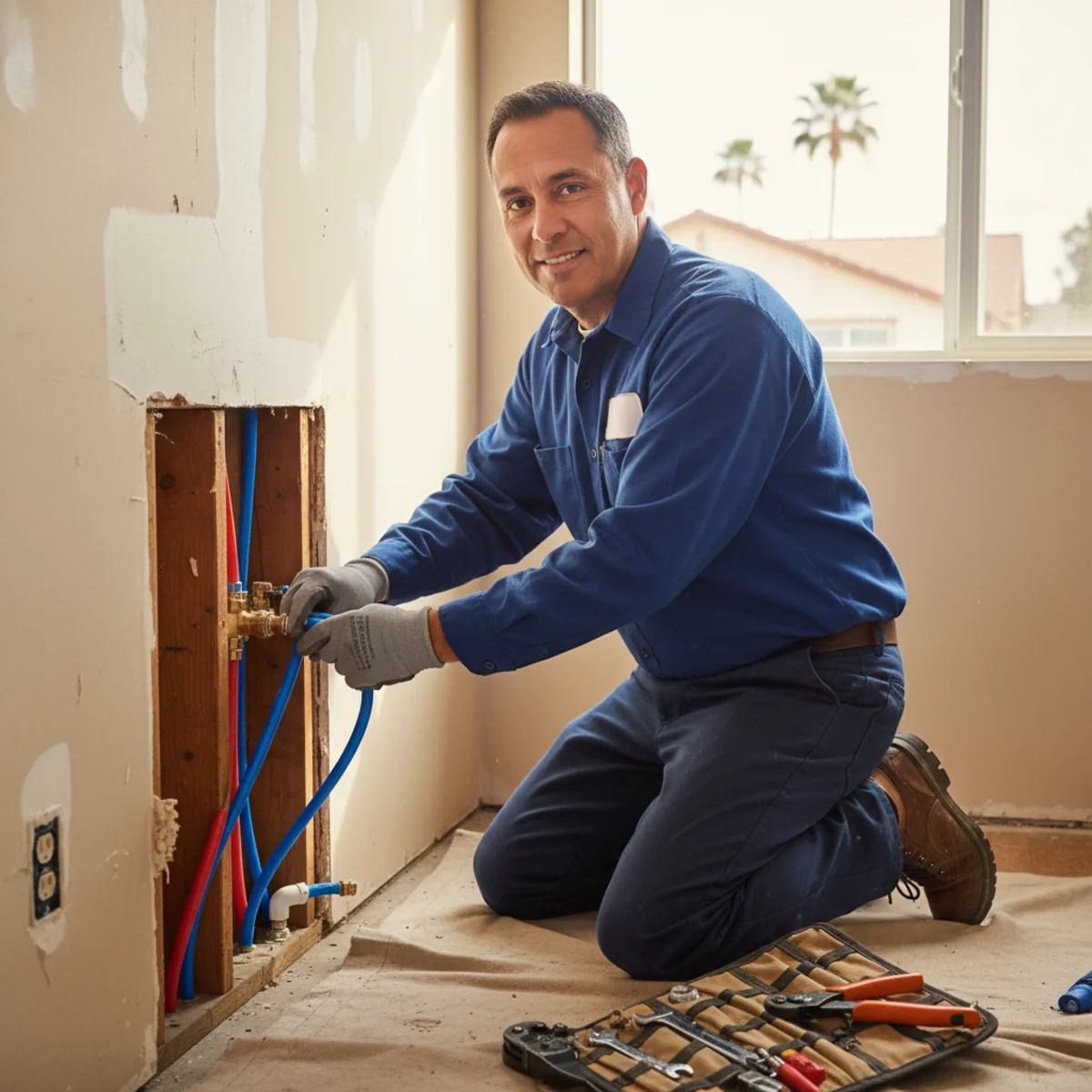
PEX is the material of choice in most modern repipes because it is flexible (which reduces the number of joints required and makes routing easier in finished walls), highly resistant to corrosion, freeze-resistant, and cost-effective. It comes in red, blue, and white for easy identification of hot and cold lines. Most licensed plumbers in Riverside County now recommend PEX for whole-home repipes.
Whole-Home vs. Partial Repipe
A partial repipe replaces only the most-affected sections -- typically a corroded branch line or a run of galvanized pipe that is actively failing. This approach makes sense when the rest of the system is in good condition and the problem is genuinely isolated. It is less disruptive and less expensive upfront.
A whole-home repipe replaces all supply lines from the main shutoff to every fixture. This approach is warranted when the pipe material itself is at end of life throughout, when recurring leaks show the whole system is deteriorating uniformly, or when a homeowner wants a long-term solution rather than incremental repairs. For homes with galvanized pipe or polybutylene, whole-home replacement is almost always the right recommendation.
What the Repipe Process Looks Like
A whole-home repipe in a Moreno Valley slab home is a larger project than in a home with a crawl space, because all supply lines must be rerouted through walls and attic space rather than beneath the floor. A typical single-family repipe takes 2-4 days. The plumber will open small access holes in walls or ceilings to run new PEX lines, connect them at a central manifold, and tie into each fixture. Drywall patching is a separate trade and is often handled by a contractor the plumber can recommend.
Water will be off during active work hours but restored each evening so the family can use the home normally. Before the project closes, the plumber should pull any required permits and arrange for a municipal inspection, ensuring the work meets current California plumbing code.
Cost and Return on Investment
Repiping costs vary based on home size, the pipe material being replaced, and access difficulty in slab homes. As a general range, whole-home repiping for a 1,500-2,500 sq ft Moreno Valley home typically falls between $6,000 and $15,000 depending on complexity. That figure sounds significant, but consider the alternative: repeated leak repairs, water damage remediation, mold remediation, and the ongoing stress of not knowing when the next pipe will fail.
A completed repipe also improves home resale value -- buyers and their inspectors view aging galvanized or polybutylene pipe as a negotiating issue or a deal-breaker. A documented repipe with permits and inspection removes that risk. Call Moreno Valley Plumbing Pros at (207) 419-2600 for a same-day assessment and a written estimate -- our team is licensed and insured and has extensive experience with slab-home repiping throughout Riverside County.
Need a plumber in Moreno Valley?
We're a local team ready to help with fast, reliable plumbing and upfront pricing. Call (207) 419-2600 or request service online.
Local plumbing help: Plumbing in Moreno Valley.