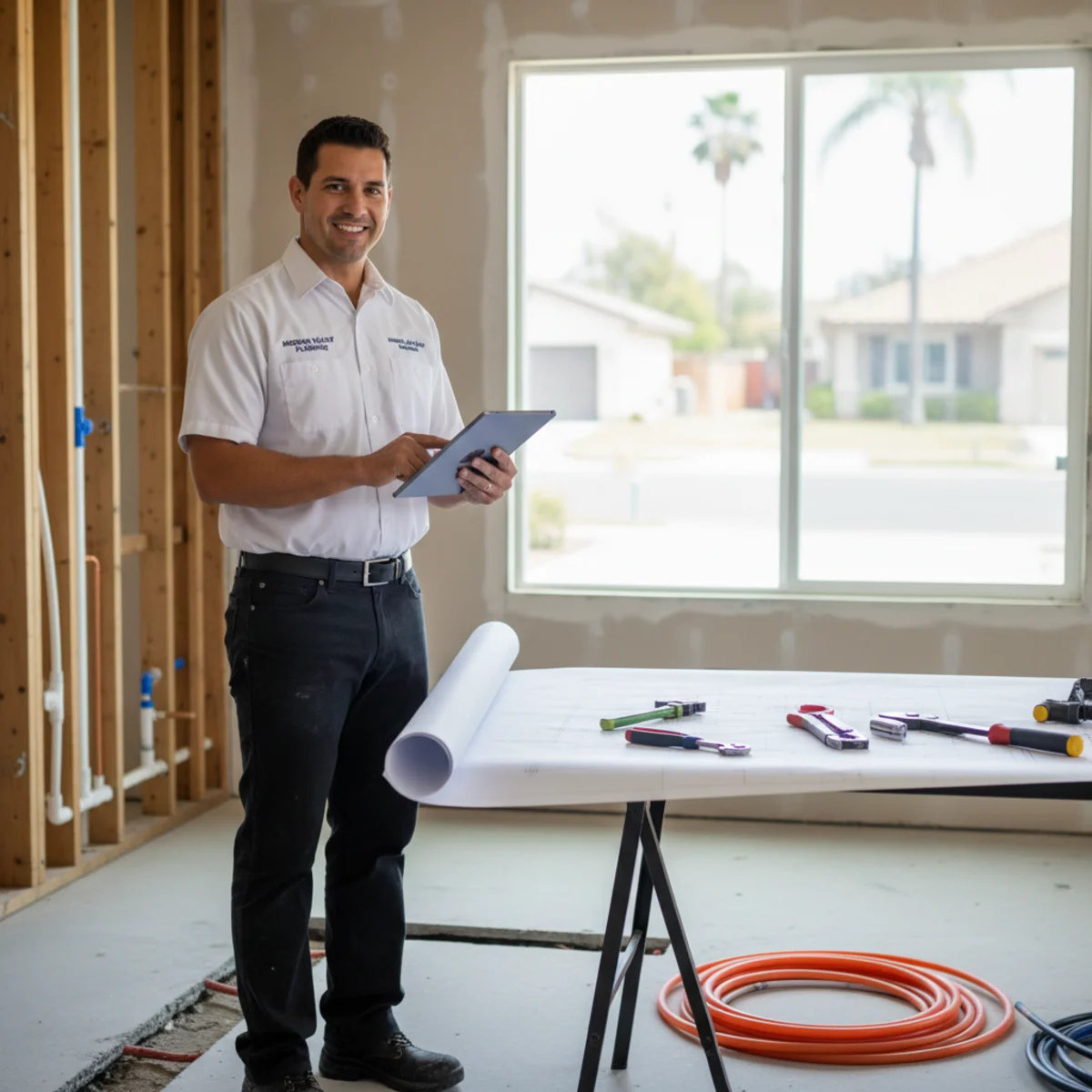
Neighborhoods like Sunnymead, Edgemont, and parts of central Moreno Valley are home to thousands of houses built between the 1960s and 1980s. These homes have served their owners well, but their original plumbing systems were never designed to last indefinitely. Galvanized steel pipes corrode from the inside. Older copper joints develop pinhole leaks. Original water heaters wear out long before homeowners replace them. And sewer lines laid in clay or cast iron decades ago have been slowly shifting and cracking ever since.
The good news is that strategic plumbing upgrades can transform an aging home's reliability, reduce water waste, improve water quality, and add meaningful resale value. You do not have to tackle everything at once — a phased approach guided by a professional plumbing inspection lets you prioritize the upgrades that matter most. Moreno Valley Plumbing Pros is licensed and insured and helps homeowners throughout the city navigate exactly these decisions. Call us at (207) 419-2600 to schedule an assessment.
What Makes Older Home Plumbing a Risk
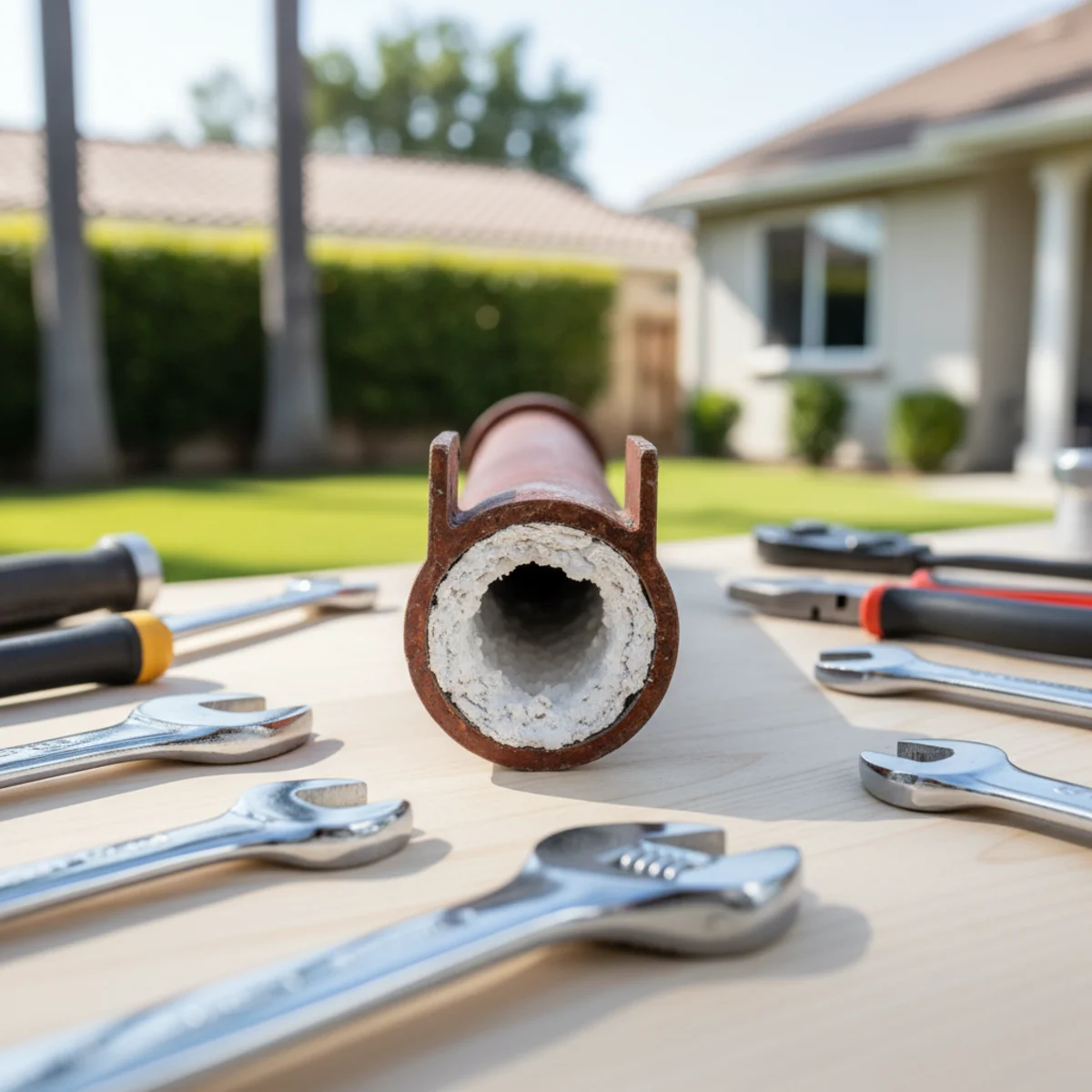
Homes built before 1990 commonly have galvanized steel supply pipes, which were the standard before copper became dominant and long before modern PEX was developed. Galvanized pipe corrodes on the interior surface over decades, progressively narrowing the pipe's flow capacity and introducing rust particles into your water. By the time brownish water appears at the tap, the pipe interior is already heavily scaled.
Older homes may also have original single-handle faucets and valves with worn washers, original shut-off valves that have never been exercised, and cast-iron or clay sewer laterals that have been subject to root intrusion and ground shifting for 40 to 60 years. Each of these systems represents a deferred maintenance liability.
Whole-Home Repiping: The Upgrade That Changes Everything
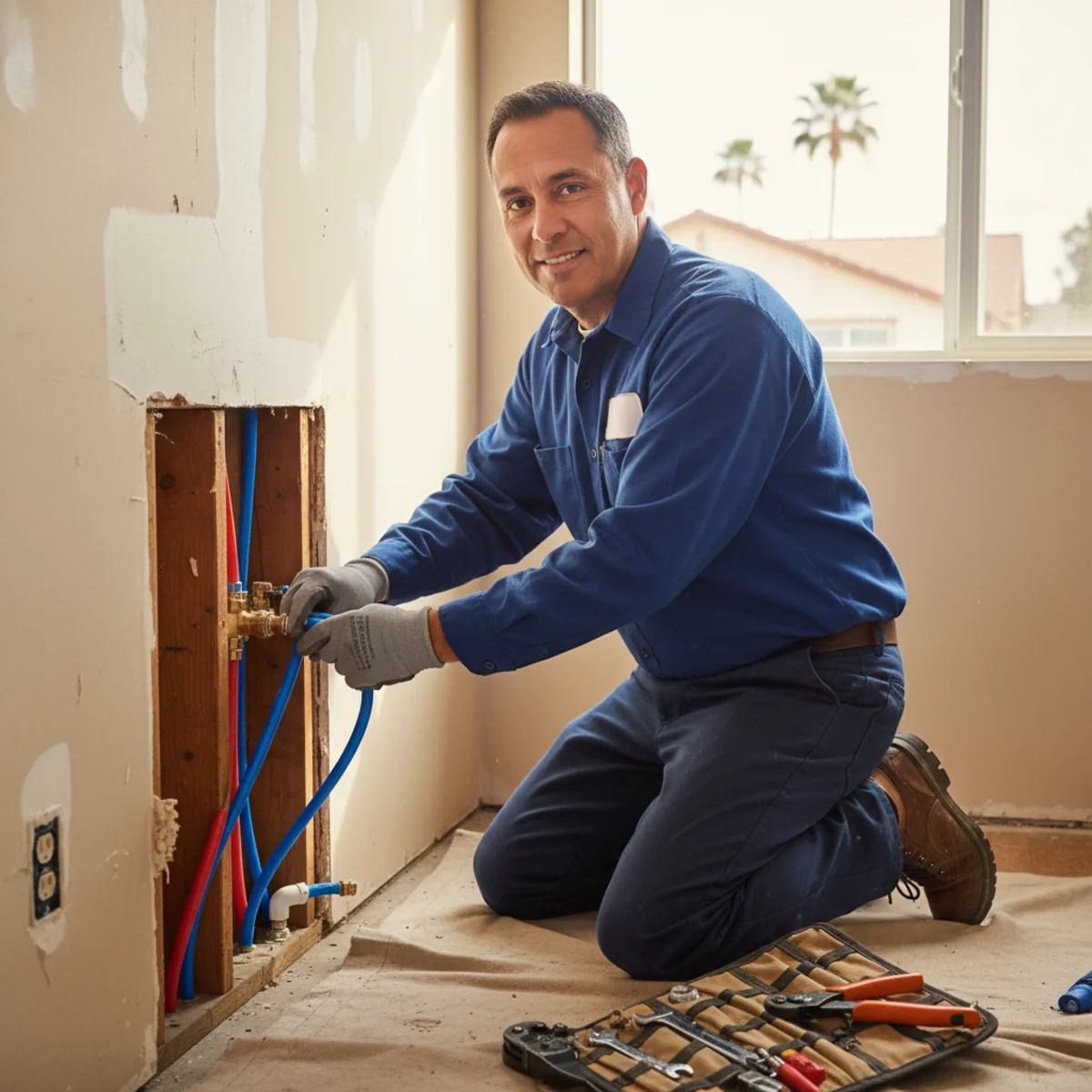
If your home still has galvanized steel supply pipes — or if it was built during the polybutylene era (roughly 1978 to 1995) — repiping with modern cross-linked polyethylene (PEX) is the single most impactful upgrade you can make. PEX is flexible, highly resistant to scale buildup from Moreno Valley's hard water, and capable of lasting 50 years or more under normal conditions. It handles the freeze-thaw cycles that occasionally affect the Inland Valley, expands slightly under pressure rather than splitting, and is faster to install than rigid pipe — which keeps labor costs lower.
A full repipe typically takes one to three days depending on home size, and most homeowners are without water for only a portion of each day during the process. After repiping, improvements in water pressure and clarity are often immediate and dramatic. The cost of a repipe should be viewed against the alternative: ongoing leak repairs, water damage events, and declining water quality.
Local tip: Ask your plumber whether your home qualifies for a whole-home repipe discount from your homeowner's insurance carrier. Some carriers reduce premiums for homes with updated plumbing systems, partially offsetting the upgrade cost.
Water Heater Upgrades for Efficiency and Reliability
Standard tank water heaters have a practical lifespan of eight to twelve years. Many older homes have units well past that age, operating at reduced efficiency as sediment from Moreno Valley's hard water accumulates on the heating element. An upgraded tank-style heater with a new anode rod and proper sizing can restore reliable hot water delivery. For households seeking greater efficiency and unlimited hot water, a tankless water heater is worth serious consideration.
Tankless units heat water on demand rather than maintaining a stored hot water supply, which eliminates standby heat loss. They also last 20 years or more with proper maintenance. In Moreno Valley's warm climate, the energy savings from eliminating standby heat loss are meaningful year-round. Tankless units do require descaling periodically given the area's hard water, but this annual maintenance is far less disruptive than an emergency water heater replacement.
Fixture and Valve Upgrades That Pay Daily Dividends
Original faucets in older homes often have worn cartridges that cause dripping, difficulty controlling temperature, or poor flow. Modern WaterSense-certified faucets use up to 30 percent less water than older designs without sacrificing performance — a meaningful saving in Southern California where water costs are high and conservation matters. Replacing aging faucet cartridges or upgrading to modern faucets eliminates annoying drips that waste thousands of gallons per year.
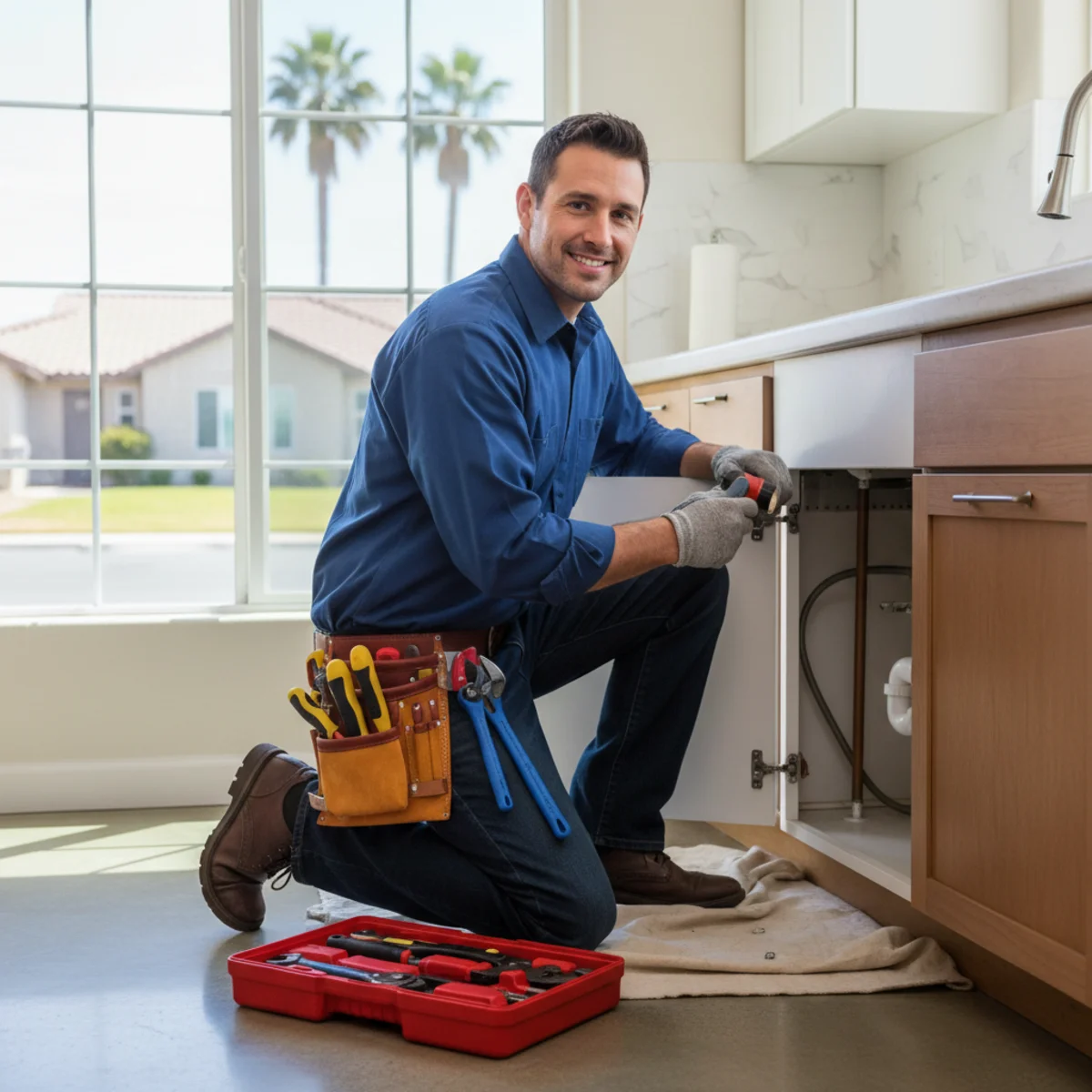
Shut-off valves throughout older homes are commonly original gate valves, which require many turns to operate and often seize with age. Replacing them with quarter-turn ball valves makes it possible to quickly shut off water to any fixture during an emergency. This is a small upgrade with outsized value — and one that every older home should prioritize before the next plumbing problem arrives.
- Replace dripping faucet cartridges to save thousands of gallons annually
- Upgrade to WaterSense fixtures to reduce water bills and meet California standards
- Swap seized gate valves for quarter-turn ball valves throughout the home
- Install pressure-balancing shower valves to prevent scalding in older bathrooms
Sewer Line Assessment and Pipe Lining
The sewer lateral that connects your home to the city sewer main is one of the most overlooked parts of an older home's plumbing system. In Moreno Valley neighborhoods from the 1970s, these laterals were commonly installed in clay or cast iron. Over time, clay pipe sections separate at joints as the ground shifts, and roots from trees and shrubs exploit those gaps eagerly. Cast iron corrodes and eventually develops holes and collapses.
A sewer camera inspection is the only way to know the true condition of your sewer lateral without digging. If the camera reveals cracks, root intrusion, or misaligned sections, pipe lining (cured-in-place lining) is often the most cost-effective remedy. A flexible liner impregnated with resin is inserted into the existing pipe and cured in place, creating a seamless new pipe inside the old one — no trench required. Trenchless sewer repair is far less disruptive and often less expensive than traditional sewer replacement.
Water Treatment: Addressing Moreno Valley's Hard Water
Moreno Valley's water supply, drawn from groundwater and the State Water Project, is classified as hard to very hard. The calcium and magnesium dissolved in the water form scale deposits inside pipes, water heaters, dishwashers, coffee makers, and any fixture that heats or moves water. A whole-house water softener addresses the problem at the point of entry, protecting every fixture and appliance in the home.
For homeowners who prefer not to add salt to a softener, scale inhibitor systems are an alternative that reduces buildup without adding sodium. Both approaches extend the life of plumbing fixtures and appliances, improve soap lathering, and reduce the film that appears on shower doors and sinks. Given the hard water conditions in the Inland Valley, some form of water treatment is a wise investment for any older home being upgraded.
Planning Your Upgrades: ROI and Phasing
Not every homeowner can do everything at once, and that is perfectly reasonable. A professional plumbing inspection can help you triage: which systems are in the most immediate danger of failure, which are aging but functional, and which are in good shape for years to come. Use that information to build a phased plan that spreads costs while addressing the most urgent risks first.
From a resale perspective, documented plumbing upgrades — especially a repipe, a new water heater, and a sewer lateral inspection — add measurable value in the Moreno Valley real estate market. Buyers increasingly request plumbing inspections, and having current documentation of a healthy system can smooth negotiations and support your asking price. Call (207) 419-2600 to schedule a full plumbing assessment and start planning your upgrades.
Need a plumber in Moreno Valley?
We're a local team ready to help with fast, reliable plumbing and upfront pricing. Call (207) 419-2600 or request service online.
Local plumbing help: Plumbing in Moreno Valley.