Every plumbing system in Moreno Valley faces an invisible opponent: hard water. The Colorado River and local groundwater sources that supply the Inland Empire carry high concentrations of dissolved calcium and magnesium -- the minerals that define water hardness. As that water flows through your pipes, heats in your water heater, and passes through your fixtures dozens of times a day, those minerals gradually deposit on every interior surface they touch.
Hard water is not a health hazard, but it is an economic one. It shortens the lifespan of water heaters and appliances, reduces pipe flow capacity over time, leaves scale deposits on fixtures, and accelerates corrosion in copper pipe. This guide explains exactly how hard water affects every component of your plumbing system and what Moreno Valley homeowners can do to protect their investment. For a consultation on water softener installation, call Moreno Valley Plumbing Pros at (207) 419-2600.
What Is Hard Water?
Water hardness refers to the concentration of dissolved calcium and magnesium ions. The U.S. Geological Survey measures hardness in milligrams per liter (mg/L) or grains per gallon (GPG). Water below 60 mg/L is considered soft; water above 180 mg/L is classified as very hard. The Inland Empire -- including Moreno Valley -- routinely measures in the 200-400 mg/L range depending on the season and the specific supply blend in use.
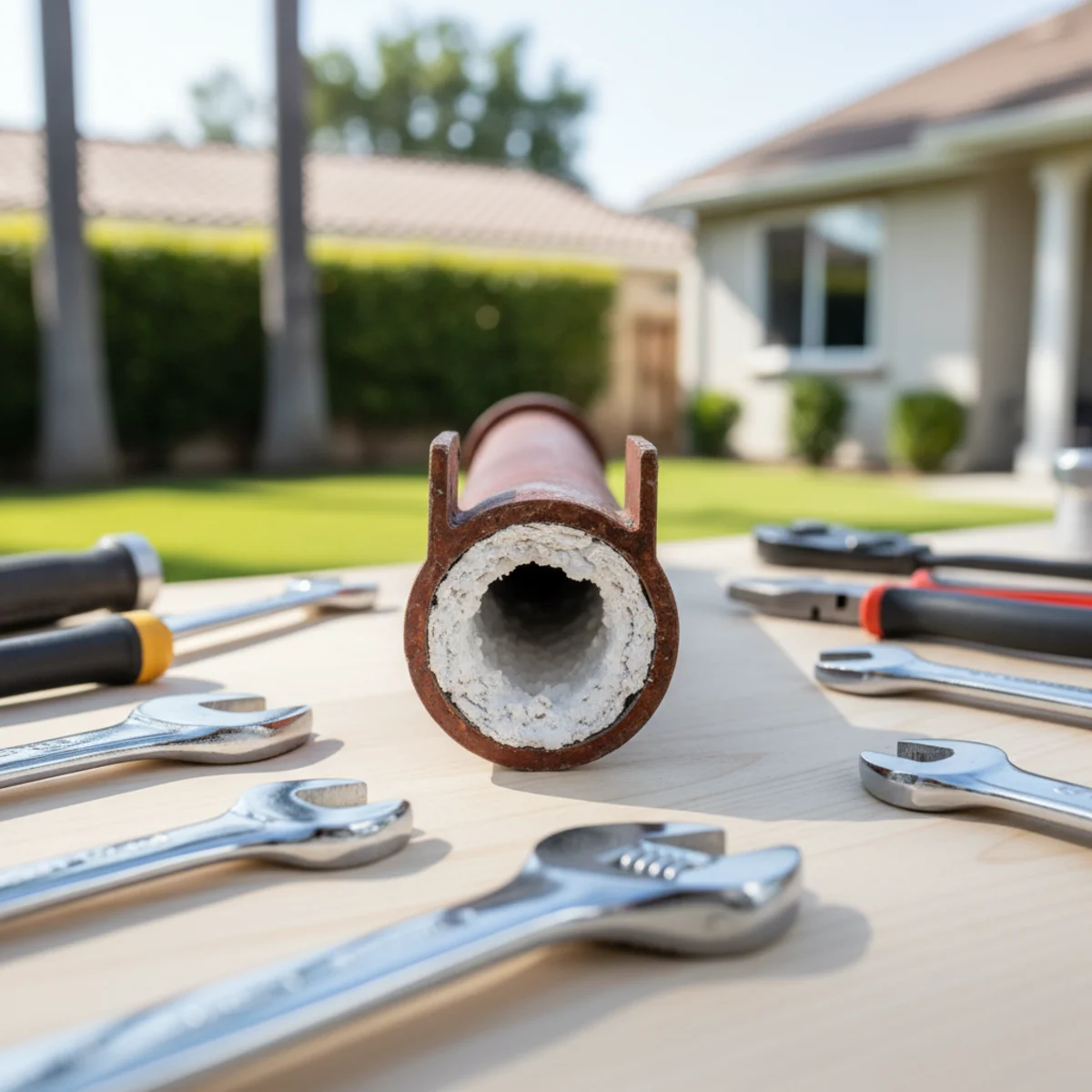
When hard water heats up -- in a water heater, a dishwasher, or a hot water pipe -- the dissolved minerals precipitate out of solution and adhere to surfaces as calcium carbonate scale. This is the white, chalky buildup you see on showerheads, faucets, and around drains. Inside pipes and appliances where you cannot see it, the same process is occurring continuously.
How Hard Is Moreno Valley's Water?
Moreno Valley is served primarily by Eastern Municipal Water District (EMWD), which blends water from the Metropolitan Water District of Southern California -- a mix of Colorado River water and State Water Project supplies. Colorado River water is consistently among the hardest in the state, with hardness levels in the 300-400 mg/L range. When blended with local groundwater sources that are often similarly hard, the resulting tap water supply in Moreno Valley is objectively very hard by any classification standard.
To put it in context: laundry detergent requires nearly twice as much product to lather effectively in hard water as in soft water. Soap scum forms faster, showers and tubs show mineral deposits within days of cleaning, and every appliance that heats water is working against ongoing scale accumulation.
Local tip: You can request a water quality report from EMWD annually. The report includes hardness data for your specific service area and provides a useful baseline for understanding what your plumbing is facing.
Effects on Pipes and Fittings
In galvanized steel pipes, scale buildup compounds existing corrosion by narrowing the pipe's interior diameter. A pipe that was 3/4 inch when installed can lose significant flow capacity after decades of scale accumulation -- this is a major cause of low water pressure in older Moreno Valley homes that still have original galvanized supply lines.
In copper pipe, hard water contributes to a specific corrosion mechanism called pitting corrosion. The interaction between mineral deposits, chlorine in the water supply, and the copper surface creates microscopic pitting that eventually develops into pinhole leaks. This is why slab leaks are disproportionately common in the Inland Empire compared to lower-hardness regions of California. Softened water measurably slows this process and extends copper pipe life significantly.
Effects on Appliances and Water Heaters
Water heaters are the appliance most directly harmed by hard water. In a tank water heater, scale accumulates at the bottom of the tank where water heats most intensely. A 1/4-inch layer of scale on the tank bottom acts as insulation between the burner and the water, forcing the unit to run longer and hotter to reach the set temperature. This translates to higher energy bills and accelerated wear on the heating elements and tank lining. Nationally, water heaters in hard-water areas fail 30-50% sooner than those in soft-water regions.
Dishwashers and washing machines experience similar issues -- heating elements scale over, spray arms clog, and the appliances run less efficiently. Annual descaling maintenance and the use of citric acid-based additives help, but the most effective solution is treating the water before it enters the appliances.
Effects on Faucets and Fixtures
The visible effects of hard water -- white scale around faucet bases, clogged aerators, reduced flow from showerheads, and spotted glass shower doors -- are the easiest symptoms to recognize. Faucet aerators in hard-water areas can clog with mineral debris within 6-12 months of installation and should be removed and soaked in white vinegar quarterly to maintain flow.
Inside the faucet body, hard water scale can cause cartridge valves to seize, making the handle hard to turn or causing the valve to drip. This is one of the reasons faucet cartridge replacement is more common in Moreno Valley than in lower-hardness areas. When replacing a faucet cartridge, always flush the line briefly before reinstalling to clear any dislodged scale particles that could re-clog the new cartridge.
Solutions: Softeners and Filters
A salt-based ion-exchange water softener is the most effective whole-home solution for hard water. The system replaces calcium and magnesium ions with sodium ions through a resin bed, producing softened water at every tap and appliance in the house. Softened water produces a noticeably different feel -- silkier on the skin, better lather from soap, and dramatically less scale accumulation. The resin bed regenerates periodically using salt, which needs to be replenished every 4-8 weeks depending on household size and water hardness.
For households with health or taste concerns about added sodium, a salt-free descaler (also called a template-assisted crystallization system) is an alternative that changes the form of the calcium crystals so they adhere less readily to surfaces, without adding sodium to the water. It does not produce the same feel as a true softener but does reduce scale effectively. A reverse osmosis system at the kitchen tap complements either approach by removing residual minerals from drinking and cooking water. Call Moreno Valley Plumbing Pros at (207) 419-2600 to discuss which system makes the most sense for your home and budget.
- Salt-based softener: most effective whole-home solution
- Salt-free descaler: reduces scale without sodium addition
- Reverse osmosis at the kitchen tap: best drinking and cooking water quality
- Showerhead filter: reduces exposure for bathing without full-system cost
- Regular descaling maintenance on appliances and fixtures
Need a plumber in Moreno Valley?
We're a local team ready to help with fast, reliable plumbing and upfront pricing. Call (207) 419-2600 or request service online.
Local plumbing help: Plumbing in Moreno Valley.