Moreno Valley is predominantly a slab-on-grade community. Unlike homes with crawl spaces or basements, slab homes have all their supply and drain plumbing buried directly in or beneath a concrete foundation. That design is efficient and cost-effective to build, but it creates a serious vulnerability: any pipe that fails under that slab can leak for weeks or months before you notice -- and by then, the damage to flooring, drywall, and even the foundation itself can be substantial.
Slab leaks are more common in the Inland Empire than many homeowners realize, driven by hard water, aging copper pipe, and the region's hot, dry climate. This guide covers what causes slab leaks, the early signs every homeowner should know, and practical prevention steps. If you already suspect a slab leak, call Moreno Valley Plumbing Pros at (207) 419-2600 -- same-day service is available and early detection saves significant money.
What Is a Slab Leak?
A slab leak is any leak in a water supply or drain line that runs through or beneath your home's concrete foundation. Because the pipes are encased in -- or run directly under -- the slab, the leak is invisible until water migrates upward through the concrete or outward to the soil. By the time you see a wet floor, warm spot, or unexplained spike in your water bill, the leak may have been active for some time.
Slab leaks can involve hot water lines, cold water lines, or drain pipes. Hot water line leaks are the most common because the thermal expansion and contraction of the pipe wears it down over time. Drain line slab leaks are rarer but can introduce sewage into the soil beneath your home.
Why Moreno Valley Homes Are at Risk
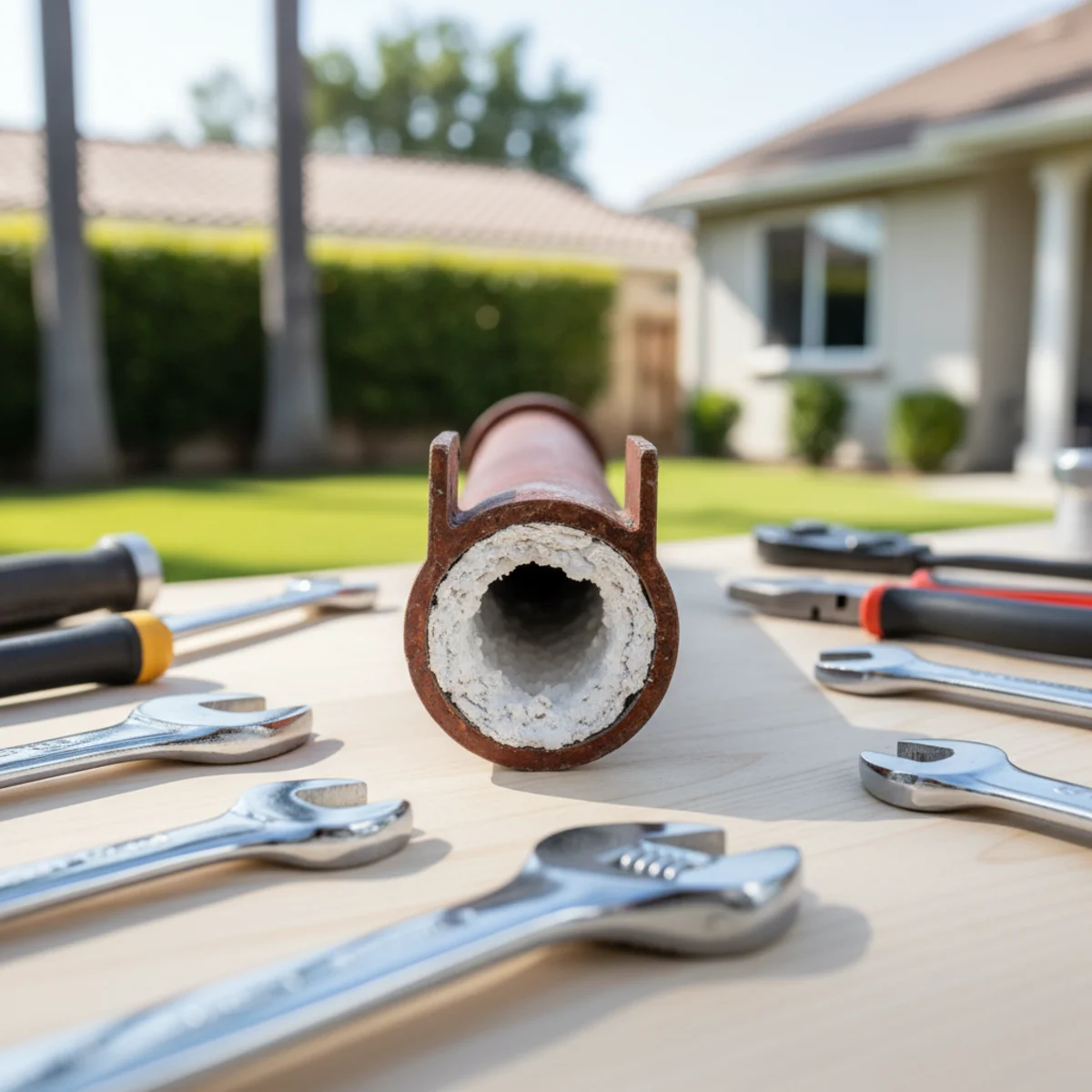
Several factors specific to Moreno Valley and Riverside County elevate slab leak risk. First, the municipal water supply is very hard -- high in dissolved calcium and magnesium -- which accelerates corrosion inside copper pipes through a process called pitting corrosion. The interior wall of the pipe develops tiny pits that grow into pinhole leaks over years. Second, Moreno Valley's hot, dry summers create significant ground movement as expansive clay soils shrink and crack. That soil shift stresses buried pipes at their joints and bends. Third, a large portion of Moreno Valley's housing stock was built in the 1970s through early 1990s, putting copper pipe systems in the 30-50 year age range where slab leaks become statistically much more likely.
Local tip: If your home was built before 1995 and has never had a plumbing inspection, scheduling one is one of the best preventive investments you can make.
Warning Signs of a Slab Leak
The challenge with slab leaks is that they often develop slowly, and the visible symptoms can be easy to explain away. Knowing what to watch for allows you to act before the damage becomes major.
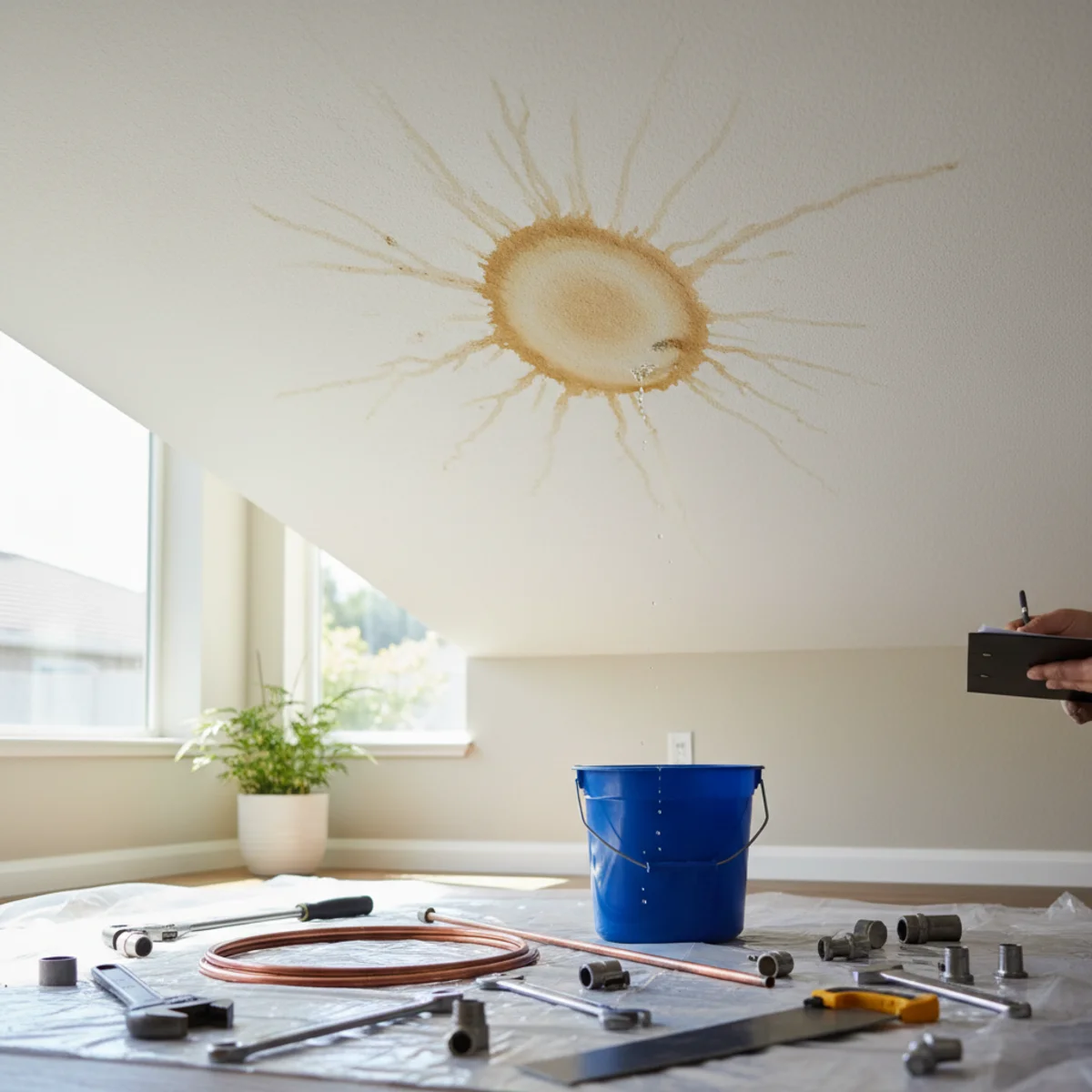
The most common warning signs include: an unexplained increase in your water bill without a change in usage, warm or hot spots on your tile or hardwood floor (indicating a hot water line leak), the sound of running water when all fixtures are turned off, cracks appearing in the floor tile or baseboard area, damp or discolored flooring or carpet, and mold or mildew smell in a lower-level room. Any single sign deserves investigation; two or more together should prompt an immediate call to a plumber.
- Water bill spikes with no change in household usage
- Warm floor spots near a hot water line path
- Visible floor cracks or lifted tile
- Sound of running water with all fixtures off
- Musty smell or visible mold at floor level
- Low water pressure throughout the home
Common Causes of Slab Leaks
Corrosion is the leading cause of slab leaks in Moreno Valley. Hard water chemistry reacts with the interior of copper pipe over time, eventually creating pinhole leaks. Exterior corrosion occurs when the soil chemistry around the pipe is aggressive -- certain clay soils contain sulfates and chlorides that attack copper from the outside.
Abrasion is another significant cause. Where pipes pass through concrete or rest against gravel, the pipe surface is slowly worn by vibration and the shifting of the slab. High water pressure -- anything above 80 PSI -- accelerates wear on every pipe fitting and joint in the system. Poor original installation, including pipes that were kinked during construction or buried without proper protective wrap, also shortens pipe life considerably.
Prevention Strategies
While you cannot make your buried pipes completely immune to wear, several strategies meaningfully reduce slab leak risk. Installing a whole-home water softener is the single highest-impact step for Moreno Valley homeowners -- softened water dramatically slows the corrosion process inside copper pipe. Pair that with a pressure-reducing valve (PRV) set to keep household water pressure at or below 65 PSI, and you reduce the physical stress on every joint and connection in the system.
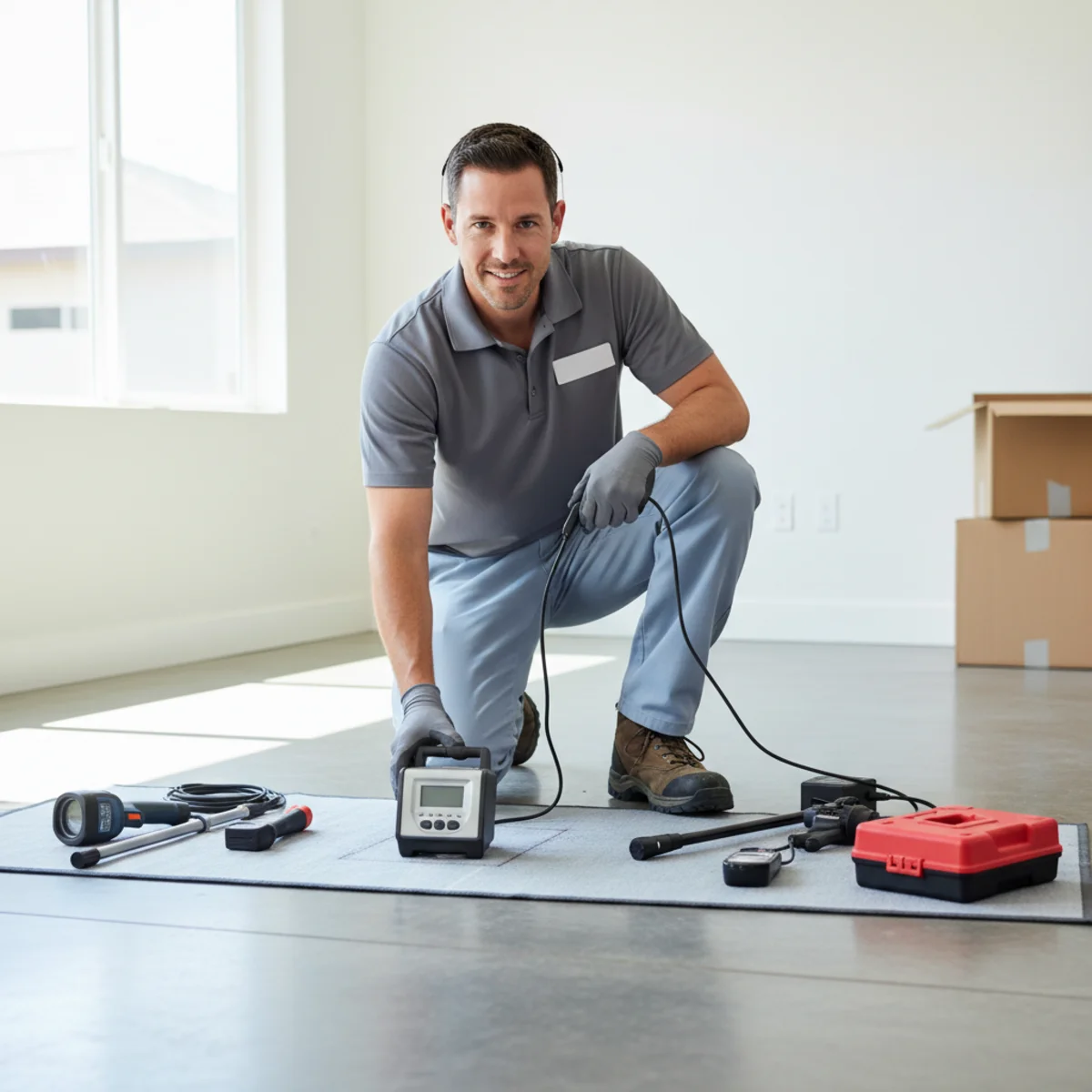
Annual plumbing inspections allow a licensed plumber to identify early signs of trouble before they become slab leaks. Modern electronic leak detection equipment can pinpoint moisture anomalies beneath a slab without opening the floor. If your home has original copper pipe from the 1970s or 1980s, discussing a partial or whole-home repipe with a licensed plumber gives you a concrete plan for long-term protection.
- Install a whole-home water softener to slow pipe corrosion
- Set water pressure at 65 PSI or below with a PRV
- Schedule annual plumbing inspections with leak detection
- Insulate hot water pipes to reduce thermal stress
- Consider repiping if copper pipe is over 40 years old
What to Do If You Suspect a Slab Leak
If you see or suspect any of the warning signs described above, the first step is to check your water meter. Turn off every water fixture in the house, locate the meter at the street, and watch the dial for 15 minutes. If it moves with everything shut off, water is leaving the system somewhere -- and a slab leak is a strong possibility.
Call Moreno Valley Plumbing Pros at (207) 419-2600. Our team uses electronic leak detection and acoustic equipment to locate the source without tearing up your floor unnecessarily. Once we confirm the leak location, we will walk you through repair options including targeted slab access, pipe rerouting, or repiping -- and we will give you a clear, written estimate before any work begins. We are licensed and insured, and we offer emergency plumbing support for active leaks.
Need a plumber in Moreno Valley?
We're a local team ready to help with fast, reliable plumbing and upfront pricing. Call (207) 419-2600 or request service online.
Local plumbing help: Plumbing in Moreno Valley.