In Moreno Valley's slab-on-grade homes, hidden water leaks are particularly insidious — because there is no crawl space or basement to reveal pooling water, a leaking pipe under the slab can run for weeks before a homeowner notices anything, all while saturating the concrete and potentially destabilizing the soil beneath the foundation.
The eight warning signs below are the ones licensed plumbers most commonly find homeowners overlooking. Catching even one of them early can mean the difference between a straightforward repair and a major structural remediation project.
A Spike in Your Water Bill
A sudden or unexplained increase in your Western Municipal Water District bill is one of the earliest and most reliable indicators of a hidden leak. Even a small, slow leak — a pinhole in a supply line, a running toilet flapper, a dripping irrigation valve — can waste thousands of gallons per month and add significantly to your bill.
To use your water bill as a diagnostic tool, compare the current month to the same month last year, adjusting for any obvious changes in usage habits like adding irrigation or filling a pool. A consistent upward trend over three to four months — with no explanation — deserves investigation.
The EPA's WaterSense program estimates that the average household loses more than 10,000 gallons per year to leaks. At Moreno Valley water rates, that is a meaningful financial loss on top of the environmental waste.
Local tip: If your bill is consistently ten to fifteen percent higher than the same period last year with no usage change, request a leak investigation from your water utility — they sometimes have tools to help identify the general source.
The Water Meter Moving When Nothing Is Running
Your water meter is the most direct leak detection tool you already own. Shut off every water-using fixture and appliance in the house — dishwasher, washing machine, irrigation, ice maker — and then check the meter. The small triangular or circular flow indicator dial should be completely still.
If it is moving, water is flowing somewhere in your system. To determine whether the leak is inside or outside the house, locate the main shut-off at the house entry (inside the garage or utility area in most Moreno Valley homes) and close it. Check the meter again. If the dial stops, the leak is inside. If it continues moving, the leak is in the line between the meter and the house.
This test is free, takes under five minutes, and can confirm whether you have an active leak before you spend money on a professional inspection.
Water Stains or Discoloration on Walls and Ceilings
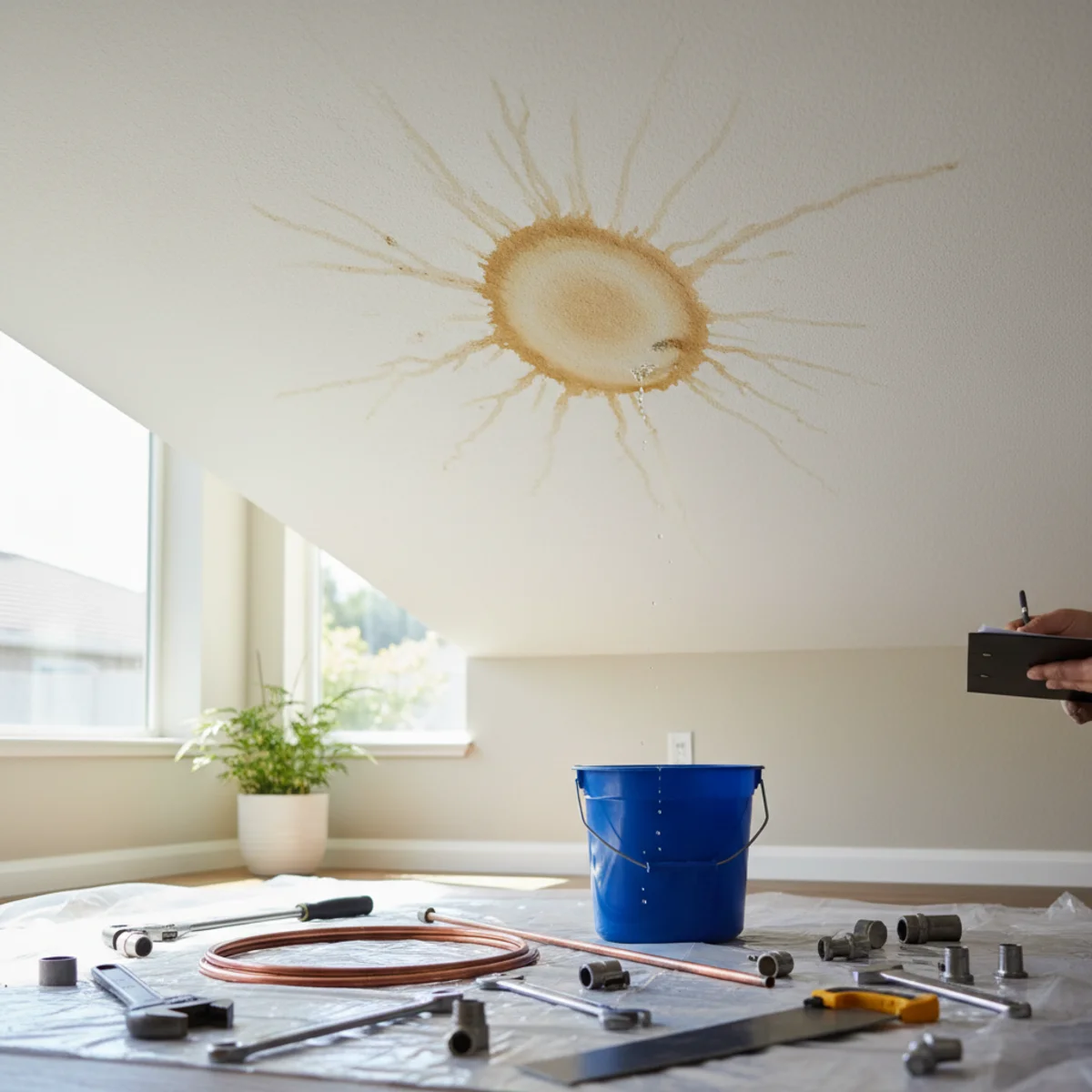
Tan, brown, or yellow rings on drywall or ceiling material almost always indicate water exposure. The staining happens as mineral-laden water evaporates and leaves its dissolved solids behind — in Moreno Valley's hard water, these rings can appear after even modest moisture exposure.
Pay attention to stains that appear in unusual locations: on a wall that does not share a plumbing wall with a bathroom, on a ceiling below an upstairs bathroom, or along the base of a wall near the exterior. These unexpected locations suggest a pipe run you may not have visualized.
Bubbling, peeling, or blistering paint on walls or ceilings often accompanies water staining and indicates that moisture has been present long enough to compromise the adhesion. Both are reasons to call for professional leak detection promptly.
Mold or Mildew Smell Without a Visible Source
A musty smell inside a room that has no obvious moisture source — no standing water, no wet towels, no recent flooding — suggests mold or mildew growing inside a wall or under flooring. Mold can establish itself within 24 to 48 hours of sustained moisture exposure, so a persistent odor usually means a leak has been running long enough to saturate building materials.
In Moreno Valley's dry climate, mold is less common than in humid coastal areas, which means a mold smell inside your home is more diagnostic — it almost certainly points to a sustained water source rather than ambient humidity. Trace the smell to its strongest point; it will often guide you toward the general area of the leak.
Mold inside walls is a health concern beyond the structural damage. If you suspect it, call (207) 419-2600 for leak detection and consult with a water damage restoration company about testing and remediation.
Warm or Wet Spots on the Floor
A warm area on a concrete or tile floor — particularly in a hallway, bathroom, or utility area — is a classic sign of a slab leak. When a hot water supply line running beneath the slab leaks, it warms the concrete directly above it. Walk barefoot across your floors occasionally; this kind of tactile inspection catches slab leaks that no visual check would reveal.
Cold-water slab leaks are subtler but create wet or slightly soft spots in flooring material, particularly if flooring is wood or laminate. Any flooring that has developed unexpected warping, cupping, or separation from its backing is worth investigating.
Slab leak repair is a specialized service that requires professional leak detection to pinpoint the exact location before any repair work begins. Accurate location is essential to minimizing the amount of slab that must be opened for access.
An Unexplained Drop in Water Pressure
If your home's water pressure has decreased without a change in the municipal supply pressure — you can check with neighbors to see if they are affected — a leak in the supply line is one likely explanation. When water is escaping through a crack or joint failure, less volume and pressure reaches your fixtures.
To distinguish between a pressure regulator failure and a supply line leak, have a plumber test static pressure at the meter versus at an interior fixture. The difference between the two readings, combined with the meter test described earlier, usually identifies whether a leak is the cause.
A pressure drop that appeared suddenly is more likely to be a regulator or a new pipe failure. One that has been gradually declining over months more often points to scale buildup or a slow leak that has been worsening progressively.
The Sound of Running Water When Everything Is Off
Stand in a quiet room and listen — particularly near plumbing walls (walls that contain pipes), in the utility area near the water heater, and near the main entry point of the water line. A faint hissing or dripping sound when all fixtures and appliances are off is a direct indicator of an active leak.
Slab leaks sometimes produce a faint rushing or hissing sound that travels through the concrete and emerges as a very quiet sound near baseboards or through floor tiles. Getting close to the floor and listening carefully is worth doing if you have any other reason to suspect a slab issue.
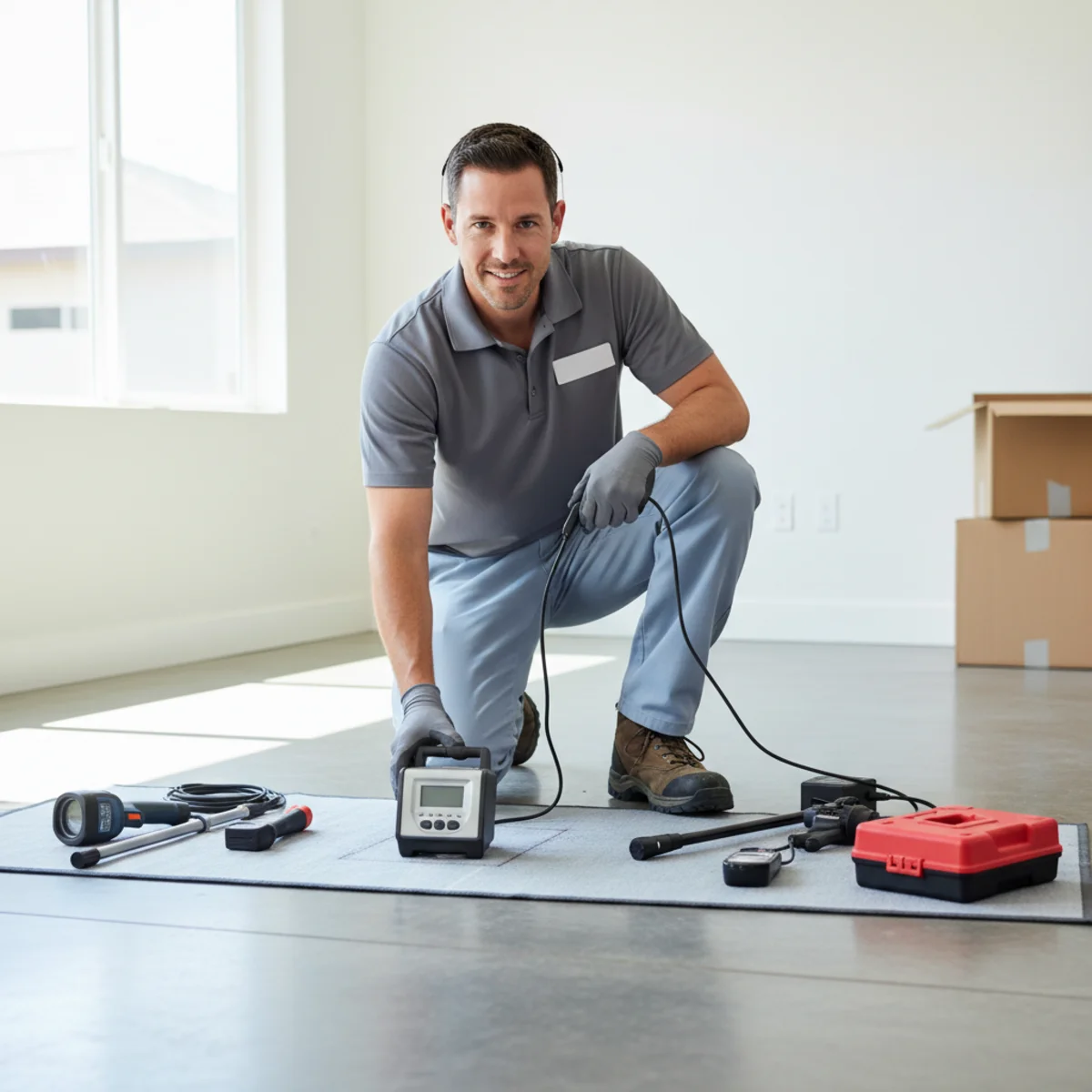
Professional leak detection equipment — acoustic listening devices and pressure testing — is far more sensitive than the human ear and can pinpoint a leak location within inches, preventing the need to open large sections of wall or floor.
New Cracks in Walls or Foundation
In Moreno Valley, soil movement is a fact of life — the region's clay-heavy soil expands and contracts with moisture changes, causing minor settling and cracking that is largely normal. But new cracks that appear without an obvious seismic event, or existing cracks that are widening, deserve closer attention.
A slab leak that saturates the soil beneath the foundation changes the soil's load-bearing behavior. As wet soil compresses differently than dry soil, the foundation can shift unevenly, producing new cracks in drywall, stucco, tile, and even the slab itself. Doors or windows that suddenly stick or do not close properly are related symptoms.
If you notice new cracking combined with any other signs on this list, call (207) 419-2600 for professional leak detection. The sooner a slab leak is identified and repaired, the less impact it will have on your home's foundation.
- New diagonal cracks in drywall above or below windows
- Stucco cracking on exterior walls in new locations
- Tile grout cracking in a line across the floor
- Doors or windows that bind or do not latch properly
Need a plumber in Moreno Valley?
We're a local team ready to help with fast, reliable plumbing and upfront pricing. Call (207) 419-2600 or request service online.
Local plumbing help: Plumbing in Moreno Valley.