Moreno Valley homeowners dealing with low water pressure often assume the problem lies with the city water supply — but in most cases, the cause is inside the property, and it is fixable. Hard water scale, aging supply lines, and failing pressure regulators are the most common culprits in Riverside County homes.
This guide walks through each possible cause from the most common to the most serious, explains how to identify which one you are dealing with, and describes the fixes available — from simple homeowner adjustments to professional repairs.
Ruling Out Municipal Supply Pressure
Before diagnosing anything inside your home, confirm that the low pressure is not a municipal supply issue. Ask a neighbor with a similar home if their pressure feels normal. Check whether the Western Municipal Water District has any active maintenance notices or pressure advisories for your area.
You can also measure the static pressure at your outdoor hose bib using an inexpensive pressure gauge that threads directly onto the faucet. Normal residential supply pressure is typically between 45 and 80 PSI. Anything below 40 PSI at the hose bib points toward either a supply problem or a pressure regulator that is set too low or failing.
If your neighbor's pressure is fine and yours is low, the problem is inside or at your property — which is good news, because that means it is yours to fix.
Local tip: Pressure gauges for hose bibs cost under fifteen dollars at most hardware stores and are one of the most useful diagnostic tools a homeowner can own.
A Failing Pressure Regulator
Most Moreno Valley homes built since the 1980s have a pressure regulator — also called a pressure reducing valve or PRV — installed where the main water line enters the house, usually near the meter or at the front of the home. Its job is to step down the higher street pressure (which can exceed 100 PSI) to a safe residential range.
Pressure regulators have a service life of roughly seven to twelve years. When one fails, it can do so in two ways: it can fail open, allowing full street pressure into the home and potentially damaging fixtures and appliances, or it can fail closed, restricting pressure to very low or even zero levels.
A failed-closed PRV is one of the most common causes of sudden, whole-house low water pressure. Replacing a PRV requires shutting off the main supply and is a job for a licensed plumber, but the part is inexpensive and the repair straightforward when performed correctly.
Mineral Scale Narrowing Your Pipes
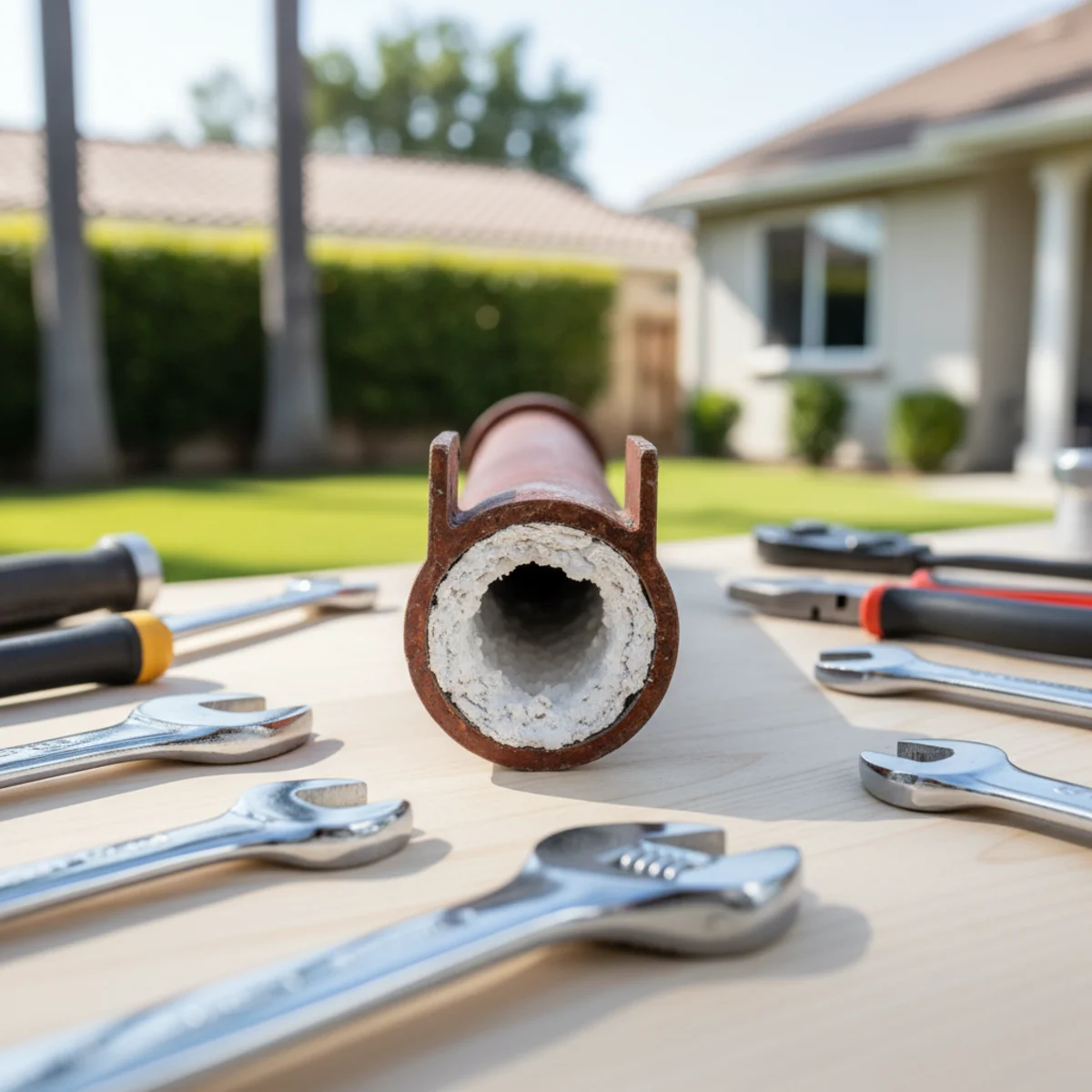
Moreno Valley's hard water leaves mineral deposits inside pipes over years of use. In galvanized steel pipes — common in homes built before the 1980s in neighborhoods like Sunnymead — the interior corrodes and accumulates scale simultaneously, dramatically reducing the effective interior diameter of the pipe.
A supply pipe that once had a three-quarter-inch interior diameter can be reduced to less than a quarter inch by decades of scale and corrosion buildup. The result is progressive, worsening low pressure across the entire home, particularly for hot water, which flows through lines that are exposed to higher temperatures and therefore more aggressive scaling.
Scale-related pressure loss is not repairable by cleaning — the pipe itself needs replacement. Repiping the affected sections or the entire home is the definitive fix, and in homes with severely corroded galvanized pipes, it is also the safest long-term choice.
- Affects hot water more than cold in many cases
- Worsens gradually over years
- More common in pre-1980 homes with original galvanized supply lines
- Repiping is the only permanent solution
Partially Closed Shut-Off Valves
This is the simplest possible cause of low water pressure and is easy to overlook. After any plumbing work, shut-off valves at the meter or at individual fixture supplies can be left partially closed. Even a quarter-turn less than fully open can meaningfully reduce pressure at fixtures downstream.
Check the main shut-off at the meter: it should be turned fully counterclockwise (or fully open for a ball valve, where the handle is parallel to the pipe). Check the secondary shut-off at the house entry as well. If you recently had any plumbing work done, trace back to any valves that a technician may have closed and confirm they are fully open.
Similarly, older gate valves — the wheel-handle style — can develop internal corrosion that prevents them from opening fully even when turned completely counterclockwise. If you have gate valves in your system and suspect one is not fully opening, replacement with a modern ball valve is worth considering.
A Leak in the Supply Line
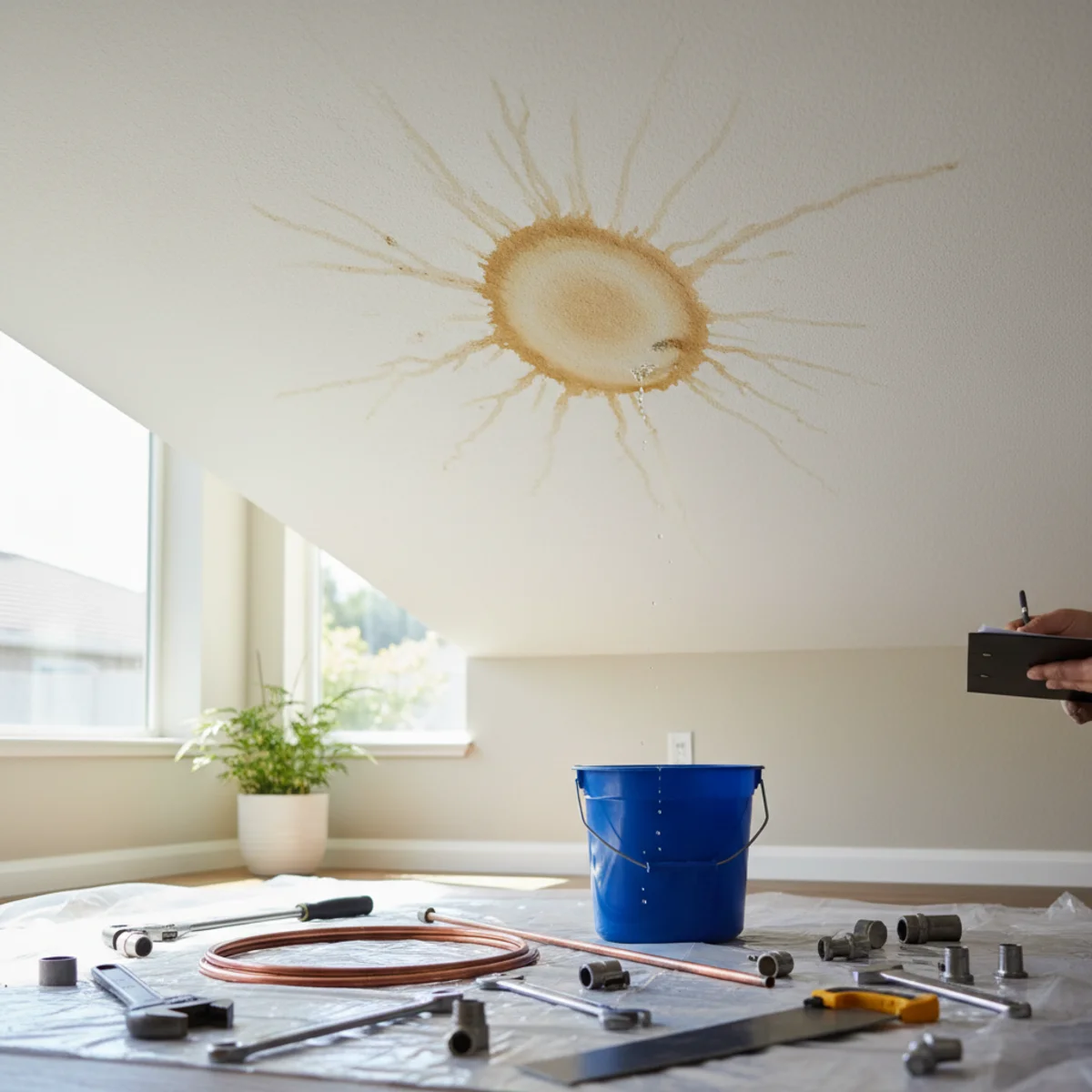
When water escapes through a crack, joint failure, or pinhole leak in the main supply line between the meter and the house, less water reaches your fixtures — and what does arrive may be at lower pressure. A supply line leak can cause a subtle but persistent pressure drop that worsens over time as the leak enlarges.
The meter test described in the hidden leak guide is the starting point: shut off all fixtures and watch the flow indicator. If it is moving, you have a leak. A plumber can perform a pressure test on the supply line to locate a leak precisely without excavation in many cases.
In Moreno Valley, supply lines running through expansive clay soil are subject to movement as the soil wets and dries through the seasons. This cyclic movement can stress pipe joints over years, making supply line leaks more common than in areas with more stable soil.
Corroded or Aging Pipes
Beyond scale, pipes themselves corrode from the outside in (from soil contact on buried lines) and the inside out (from water chemistry). Galvanized steel pipes are the most vulnerable — they were used extensively in residential construction through the 1970s and are now well past their design service life in many Moreno Valley homes.
Copper pipes are generally more durable, but older copper can develop pinhole leaks in hard-water environments and may require partial or full repiping when failures become frequent. PEX plumbing — a flexible plastic pipe used in modern construction and repipes — is more resistant to scale and to the cyclic soil movement common in Moreno Valley.
If your home has galvanized steel pipes and is experiencing chronic low pressure, multiple leaks, or discolored water, a whole-home repipe is worth discussing with a licensed plumber. The upfront cost is meaningful, but the result is decades of reliable performance and the elimination of emergency repair calls.
How to Fix Low Water Pressure
The fix depends entirely on the cause. For a partially closed valve, the solution is five minutes of turning. For a failing PRV, it is a valve replacement scheduled with a plumber. For scale in individual fixtures — aerators, showerheads — disassembling and soaking in white vinegar removes deposits and restores flow at that fixture.
For whole-house pressure issues caused by aging pipes or supply line leaks, a professional plumber needs to diagnose and repair or replace the affected components. These are not DIY projects; supply line work requires excavation, and repiping requires permits and licensed work in California.
Call (207) 419-2600 to have a licensed and insured plumber assess your home's water pressure. Moreno Valley Plumbing Pros provides pressure testing, PRV replacement, water line repair, and repiping services with same-day service available when needed.
Need a plumber in Moreno Valley?
We're a local team ready to help with fast, reliable plumbing and upfront pricing. Call (207) 419-2600 or request service online.
Local plumbing help: Plumbing in Moreno Valley.