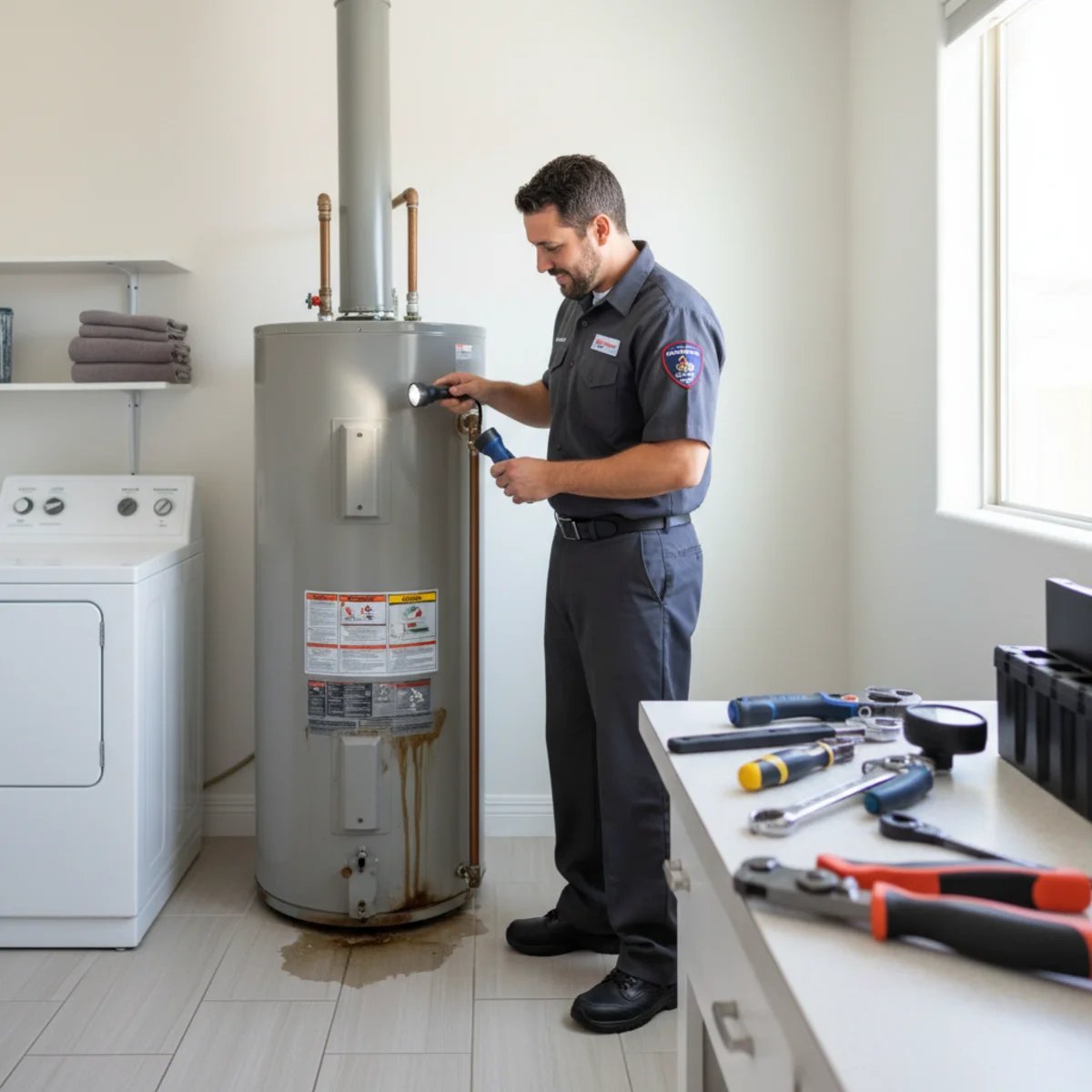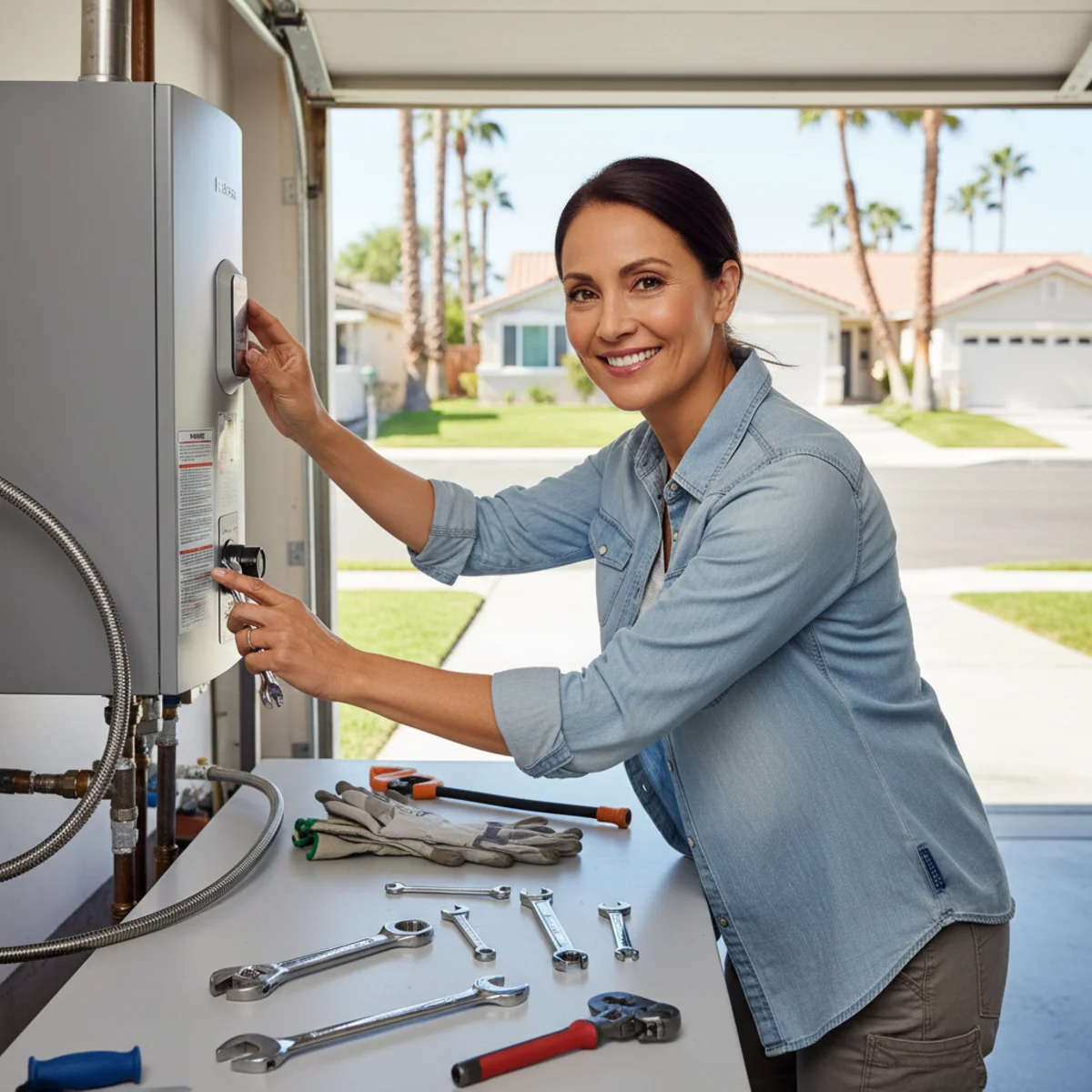
Tankless water heaters are one of the best upgrades a Moreno Valley homeowner can make — but in Riverside County's hard water, skipping annual maintenance is the fastest way to turn a fifteen-year appliance into a seven-year problem.
This guide walks through every maintenance task your tankless unit needs, how often to do it, and which tasks are safe DIY jobs versus which ones are better handled by a licensed plumber.
Why Maintenance Matters in Moreno Valley
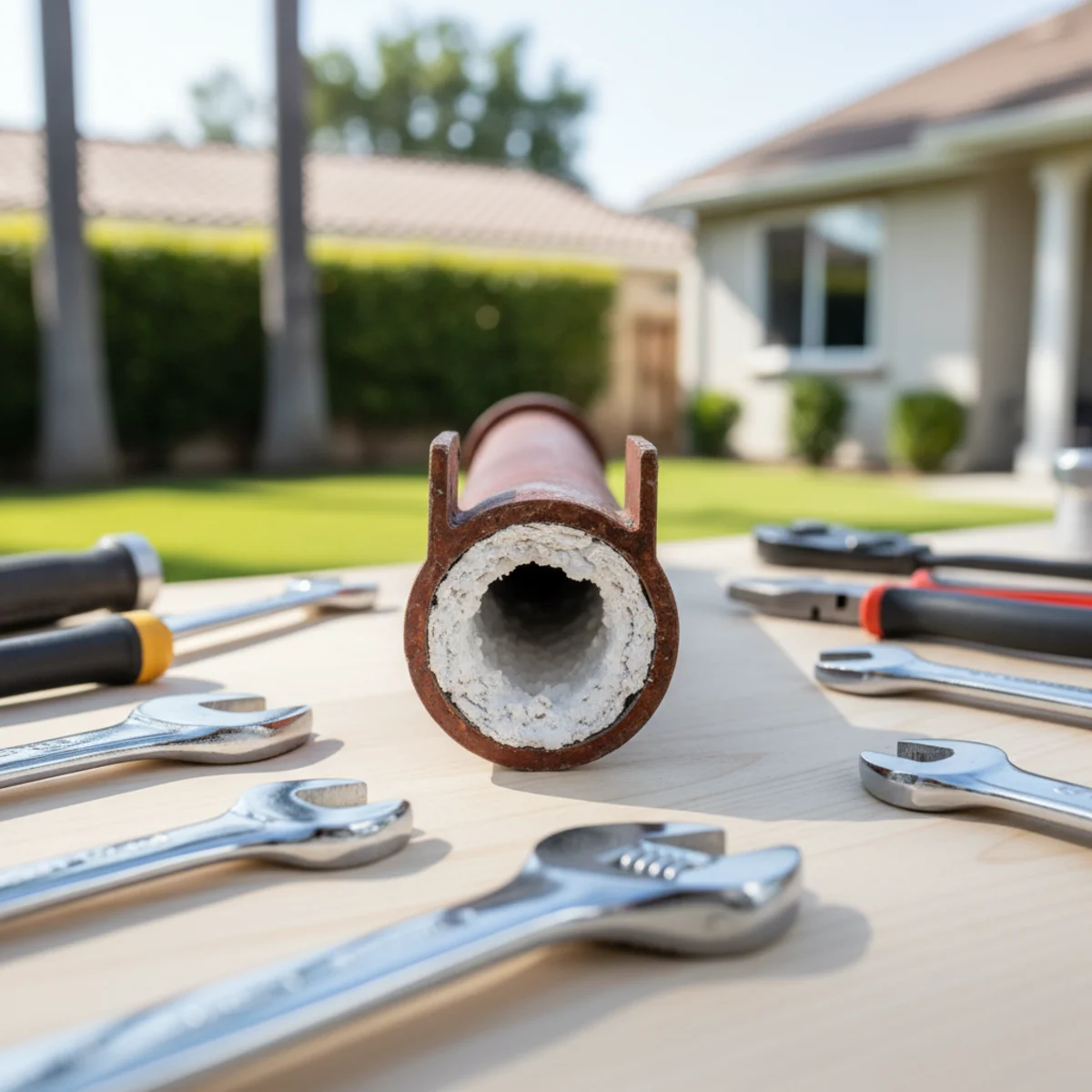
Moreno Valley's municipal water supply carries a high concentration of calcium and magnesium — the minerals that define hard water. In a traditional tank water heater, these minerals settle as sediment at the bottom of the tank. In a tankless unit, they deposit directly on the copper heat exchanger — the component that actually heats the water — because that is where temperature spikes are greatest.
Scale buildup on the heat exchanger forces the unit to work harder to reach target temperatures, which increases gas or electricity consumption and creates thermal stress on the exchanger coils. Left unaddressed over two to three years, scale can crack the heat exchanger — an expensive repair that sometimes costs more than the unit itself.
In softer-water regions, tankless maintenance every two years might suffice. In Moreno Valley, annual descaling is the responsible interval, and some plumbers recommend every eight to ten months for families with very high hot-water usage.
Local tip: Check your water hardness with a test strip from a hardware store — it takes two minutes and gives you a concrete number to share with your plumber when discussing maintenance frequency.
Annual Descaling Flush
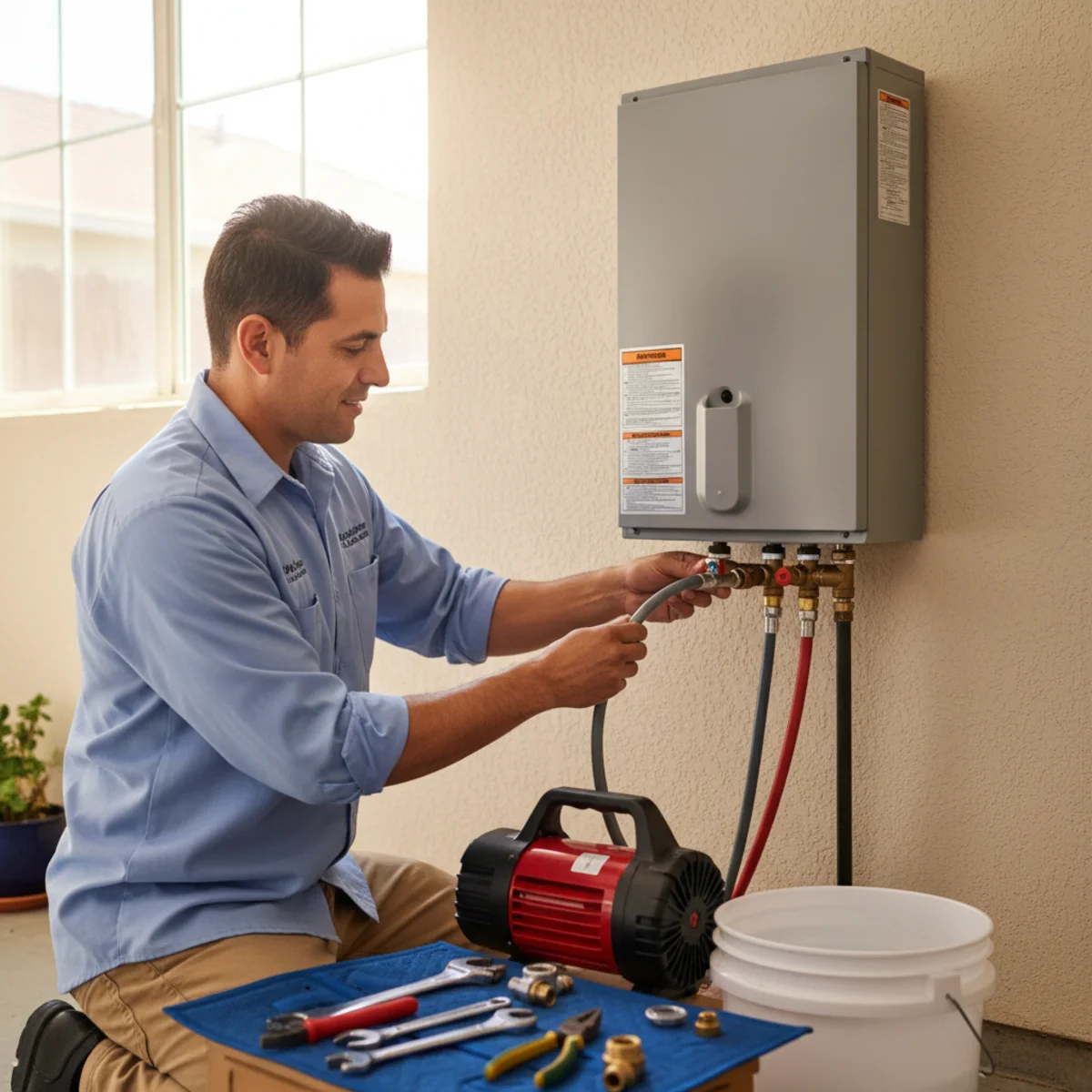
The annual descaling flush is the single most important maintenance task for a tankless water heater in hard-water areas. The process involves circulating a food-grade white vinegar or a commercial descaling solution through the heat exchanger using a small submersible pump and hose set, which you can purchase or rent.
To perform the flush: shut off the gas or electrical supply to the unit, close the hot and cold service valves, connect the descaling hose kit to the flush ports (most modern tankless units have them built in), fill a five-gallon bucket with the descaling solution, run the pump to circulate solution through the heat exchanger for forty-five to sixty minutes, then flush with clean water.
This process dissolves calcium and magnesium deposits from the heat exchanger interior, restoring heat transfer efficiency. Many homeowners comfortable with basic plumbing handle this themselves. If you are unsure about accessing the flush ports, working near the gas line, or interpreting what you find, calling a licensed plumber is the right move — call (207) 419-2600 to schedule a professional descaling service.
- Shut off power and close service valves before starting
- Use food-grade white vinegar or manufacturer-approved descaler
- Circulate for 45-60 minutes for effective scale removal
- Flush thoroughly with clean water afterward
- Check for leaks at all connections before restoring service
Cleaning the Inlet Filter Screen
Most tankless water heaters include a small mesh screen filter on the cold water inlet to catch sediment before it enters the unit. In Moreno Valley, where sediment from the water supply can be significant, this filter should be inspected every three to six months and cleaned as needed.
To access it, close the cold water service valve, open a nearby hot faucet to release pressure, then unscrew the filter from the inlet connection. Rinse the screen under running water and use a soft brush to remove any debris. Reinstall and restore water flow.
A clogged inlet filter reduces flow to the unit and causes it to work harder to maintain pressure, which can trigger error codes and reduced hot-water output. This is one of the simplest maintenance tasks and takes under ten minutes.
Checking the Venting System
Gas-powered tankless water heaters require proper venting to exhaust combustion gases and draw in fresh combustion air. A blocked or disconnected vent can cause carbon monoxide to back-draft into the home — a serious safety hazard.
Once a year, visually inspect the vent pipes for any disconnections, rust, bird nests, or obstructions at the exterior termination cap. Make sure the exterior cap screen is clear of debris, spider webs, and leaf buildup — a common issue in Moreno Valley's hot dry climate where insects and debris accumulate around exterior openings.
If your unit has displayed any venting error codes, or if you ever smell exhaust fumes near the unit, stop using it and call (207) 419-2600 immediately. Venting issues are a safety matter that requires a licensed professional.
Understanding Error Codes
Modern tankless water heaters display alphanumeric error codes when something is wrong. The specific codes vary by manufacturer and model, so keep your owner's manual accessible (or download a PDF from the manufacturer's website).
Common codes relate to ignition failure, flame sensor issues, venting problems, flow rate below minimum (your unit needs a certain minimum flow to activate), and overheating from scale buildup. A code that recurs after resetting almost always requires professional attention — resetting and ignoring a recurring code can damage the unit further.
Codes related to flow rate (often labeled 'minimum flow not reached') can sometimes be resolved by cleaning the inlet filter or adjusting fixture flow rates. Codes related to overheating or heat exchanger temperature are a signal that a descaling flush is overdue.
The Case for a Water Softener
For Moreno Valley homeowners with a tankless water heater, installing a whole-home water softener is one of the highest-return investments available. By replacing calcium and magnesium ions with sodium ions before water enters any fixture or appliance, a water softener essentially eliminates scale formation inside the tankless unit.
The result is extended heat exchanger life, reduced maintenance frequency, lower energy bills (scale acts as insulation and increases energy use), and better performance from every water-connected appliance in the house. Showerheads, faucets, dishwashers, and washing machines all last longer with softened water.
The upfront cost of a water softener installation is meaningful, but when you factor in the extended life of multiple appliances and reduced energy costs, the math typically works in favor of installation within a few years.
When to Schedule Professional Service
Annual professional maintenance is worth scheduling even for homeowners who handle some tasks themselves. A licensed plumber can inspect the heat exchanger condition, test combustion efficiency on gas units, check gas connections for micro-leaks, verify venting integrity, and assess whether the unit is performing within manufacturer specifications.
Moreno Valley Plumbing Pros offers tankless water heater maintenance service to help you protect your investment. Call (207) 419-2600 to schedule same-day service when available, or set up a recurring annual appointment so the maintenance never slips through the cracks.
Need a plumber in Moreno Valley?
We're a local team ready to help with fast, reliable plumbing and upfront pricing. Call (207) 419-2600 or request service online.
Local plumbing help: Plumbing in Moreno Valley.