Not long ago, diagnosing a sewer line problem in a Moreno Valley home meant educated guessing followed by expensive excavation to see what was actually wrong. Today, a sewer camera inspection gives plumbers and homeowners a real-time view inside the pipe — so repairs are targeted, accurate, and far less disruptive.
If you have been told you need a camera inspection or you are wondering whether your older home's sewer line is in good condition, this guide explains exactly what the process involves, what it finds, and how to make sense of the results.
What Is a Sewer Camera Inspection?
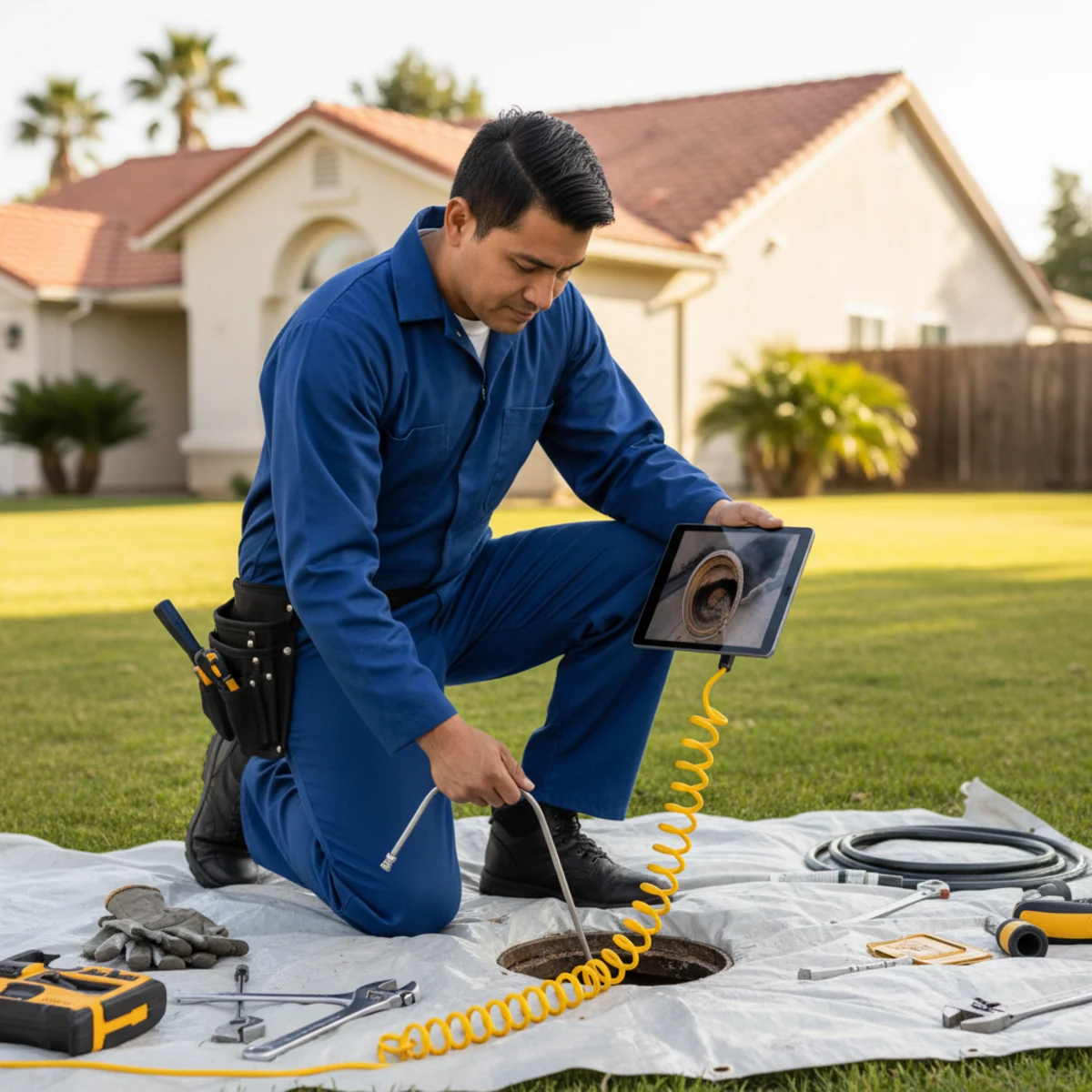
A sewer camera inspection uses a flexible, waterproof camera mounted on the end of a specialized cable to travel through your drain and sewer lines and transmit live video to a monitor above ground. The camera records the journey, giving the plumber — and you, if you are present — a clear view of the pipe's interior condition.
Modern inspection cameras include LED lighting, which illuminates the dark interior of the pipe regardless of depth, and many systems include a locating transmitter that allows a technician to pinpoint exactly where underground the camera is at any moment. This locating capability is critical: when the camera identifies a problem, the technician can mark the exact spot on the surface, enabling precise excavation or trenchless repair targeting.
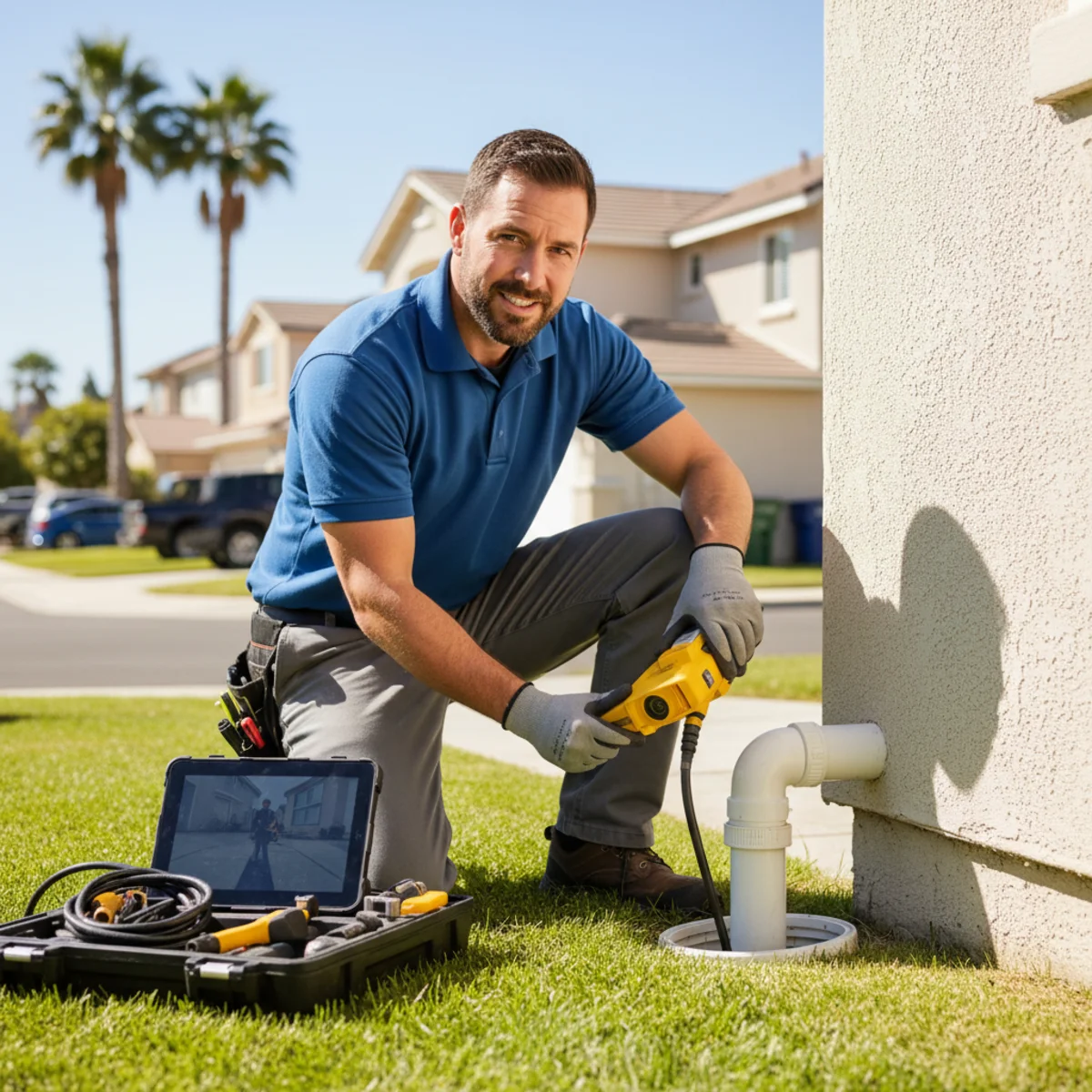
The inspection is completely non-invasive. Nothing is dug, cut, or disturbed. The camera enters through an existing cleanout access point — usually a capped pipe near the home's foundation or in the yard — and travels through the line.
How the Inspection Works, Step by Step
The plumber locates the sewer cleanout access, typically on the exterior of your home near the foundation or in the front yard. If no cleanout is accessible, entry can sometimes be made through a removed toilet. The cleanout cap is removed and the camera cable is fed into the line.
As the camera travels through the pipe, the plumber watches the live feed on a monitor and narrates what is visible, noting the condition of pipe walls, any visible blockages, joint conditions, and any areas where the pipe has shifted, cracked, or collapsed. The recording captures the full inspection for later reference.
When a significant finding appears, the plumber stops the camera, uses the surface locator to mark the exact position, and notes the depth at which the camera is located. This information becomes the basis for the repair recommendation. A complete inspection of a typical residential sewer lateral takes thirty to sixty minutes depending on line length and the number of issues encountered.
- Cleanout access located and opened
- Camera cable fed into the line
- Live video monitored and narrated by the plumber
- Significant findings noted and surface-located
- Full inspection recorded for documentation
What the Camera Reveals
The range of problems a sewer camera identifies covers virtually every type of sewer line failure. Root intrusion is one of the most common findings in Moreno Valley's established neighborhoods, where mature trees have had decades to send roots toward the moisture of sewer lines. The camera shows roots ranging from fine hair-like tendrils to thick woody masses filling the pipe.
Scale and grease accumulation appears as a visible narrowing of the pipe diameter — a pipe that started round appears to have an increasingly oval or star-shaped interior as buildup layers thicken. Joint failures — places where pipe segments have separated — show as gaps, angular misalignments, or areas where soil and roots have begun entering through the joint.
Pipe collapse, where a section of the pipe has partially or fully caved in, appears as an abrupt blockage. Cracks in pipe walls, interior corrosion in cast-iron pipe, and the bellied sections (sections that have sunk and now hold standing water) are all clearly visible. The camera cannot lie about what is there — it is an objective record of the pipe's actual condition.
- Root intrusion — from fine tendrils to solid blockages
- Grease and scale buildup narrowing the pipe
- Joint separation and offset joints
- Cracks, holes, or corrosion in pipe walls
- Pipe collapse or severe deformation
- Bellied sections holding standing water
Local tip: Ask the plumber to walk you through the recording after the inspection — understanding what was found makes the repair conversation much more productive.
When to Schedule a Sewer Camera Inspection
A camera inspection is the right call when you experience recurring drain backups, multiple slow drains, gurgling sounds from toilets, unexplained sewage odor, or any of the sewer line warning signs described in our sewer line warning signs guide.
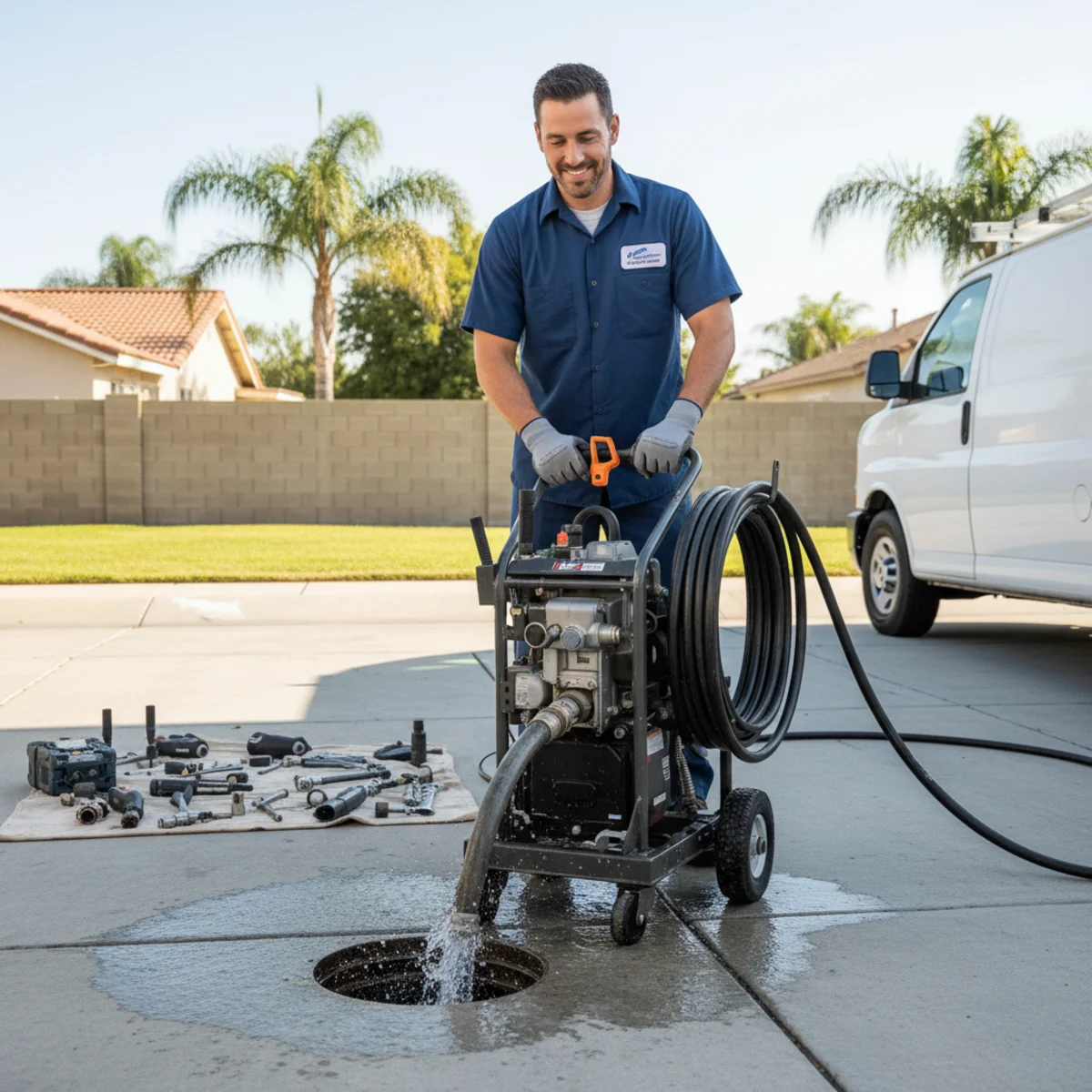
It is also appropriate after a hydro-jetting service to confirm the line is fully cleared and to document the pipe condition post-cleaning. Before major landscaping work in your yard — particularly tree planting or removal near where the sewer line runs — a quick camera look confirms you will not be disturbing or placing stress on a vulnerable section of pipe.
For older Moreno Valley homes — generally anything built before 1985 that has not had a camera inspection in the past five to seven years — a proactive inspection is one of the most cost-effective home maintenance investments available. Catching a developing problem before it becomes an emergency saves the cost of emergency service plus the collateral damage a sewage backup causes.
Camera Inspection When Buying a Home
A standard home inspection does not include the sewer lateral — inspectors examine the interior plumbing but do not run a camera through the underground line. For buyers purchasing older homes in Moreno Valley, adding a sewer camera inspection to the pre-purchase due diligence is strongly advisable.
The reason is simple: sewer lateral repair or replacement is one of the larger unexpected costs a homeowner can face. Discovering that the lateral has significant root intrusion or a damaged section before you close allows you to negotiate a price adjustment or request the seller address the repair — whereas discovering it six months after you move in means you absorb the full cost.
Moreno Valley Plumbing Pros can schedule a pre-purchase sewer camera inspection quickly, often within the inspection contingency period. Call (207) 419-2600 to arrange.
What Happens After the Inspection
After reviewing the inspection recording, the plumber presents findings and recommends appropriate next steps. The recommendation depends on what was found: hydro-jetting to clear roots and buildup, trenchless sewer repair if the pipe structure is compromised but still intact enough for lining, or excavation and replacement for severely collapsed sections.
You receive a recording of the inspection and, in most cases, a written summary of findings. This documentation is useful for insurance purposes, for negotiating with home sellers, and as a baseline for tracking pipe condition over future inspections.
Not every camera inspection results in immediate repair work — sometimes a line that is slow due to light root intrusion can be cleared and monitored annually rather than addressed with a more significant repair immediately. The goal is accurate information so you can make the right decision for your home and budget.
Need a plumber in Moreno Valley?
We're a local team ready to help with fast, reliable plumbing and upfront pricing. Call (207) 419-2600 or request service online.
Local plumbing help: Plumbing in Moreno Valley.