Natural gas is one of the safest energy sources available when handled correctly -- but it demands respect. In Moreno Valley, natural gas powers water heaters, furnaces, stoves, dryers, and outdoor grills in the majority of single-family homes. Most homeowners go years without ever thinking about their gas lines, and that is generally fine. But when something goes wrong -- a line corrodes, an appliance fitting loosens, or a contractor nicks a buried line -- the consequences can be severe and fast-moving.
This guide covers the practical safety knowledge every gas-served homeowner in Moreno Valley should have: how to detect a gas leak, what to do and what not to do in an emergency, and which types of gas line work always require a licensed professional. If you smell gas right now, leave the building immediately and call SoCalGas at 1-800-427-2200, then call us at (207) 419-2600 for emergency plumbing support after the utility clears the scene.
Recognizing a Gas Leak
Natural gas is odorless in its raw form. Utility companies add a chemical called mercaptan that gives it a distinctive rotten-egg or sulfur smell specifically so leaks can be detected. If you smell that odor anywhere in or around your home, take it seriously immediately -- even a faint smell warrants action.
Other signs of a gas leak include: a hissing or whistling sound near a gas line or appliance, dead or discolored vegetation in a patch above an underground gas line, bubbling in standing water near the ground, and a fine mist or fog appearing over the ground in dry conditions. Physical symptoms of gas exposure -- dizziness, nausea, headache, or eye irritation -- while indoors can also indicate a gas presence.
- Rotten-egg or sulfur smell -- the clearest indicator
- Hissing sound near a gas appliance or line
- Dead grass or plants in a specific outdoor area
- Headache, nausea, or dizziness when at home that clears outside
- Gas pilot that repeatedly goes out for no apparent reason
What to Do During a Gas Leak
If you smell gas inside your home, act immediately and follow these steps without deviation. Do not turn on or off any electrical switches -- a spark is all it takes. Do not use your phone inside the building. Do not try to find the leak yourself. Leave every door open as you exit to provide ventilation but do not linger. Get everyone, including pets, out of the home. Once you are a safe distance away -- at least 100 feet -- call SoCalGas at 1-800-427-2200 from your cell phone and call 911.
Once the utility has cleared the scene and confirmed the gas supply is shut off, call Moreno Valley Plumbing Pros at (207) 419-2600. Our licensed and insured technicians can inspect and repair the gas line and test all connections before you return the gas to service. Never re-enter a home where a gas leak was detected until the utility or a licensed plumber has inspected and cleared it.
Local tip: Know where your main gas shutoff valve is before an emergency occurs. It is typically located on the gas meter, which is usually on the side or rear of the building. Shutting it off requires a wrench -- keep a crescent wrench nearby.
Gas Line Safety in Older Homes
Older homes in Sunnymead and Edgemont -- many built in the 1960s and 1970s -- may have black steel gas pipe that was state-of-the-art at the time of construction. Black steel pipe has an excellent track record, but its threaded connections and any brass fittings can corrode over decades, particularly in locations where the pipe is exposed to moisture. Attic runs, garage locations near automotive chemicals, and areas with condensation are higher-risk zones.
If your home is older and you have not had a gas line inspection in the past 5-10 years, consider scheduling one. A licensed plumber will pressure-test the system, check all accessible connections, and identify any corroded fittings or flexible connectors that need replacement.
Appliance Connections and Flex Lines
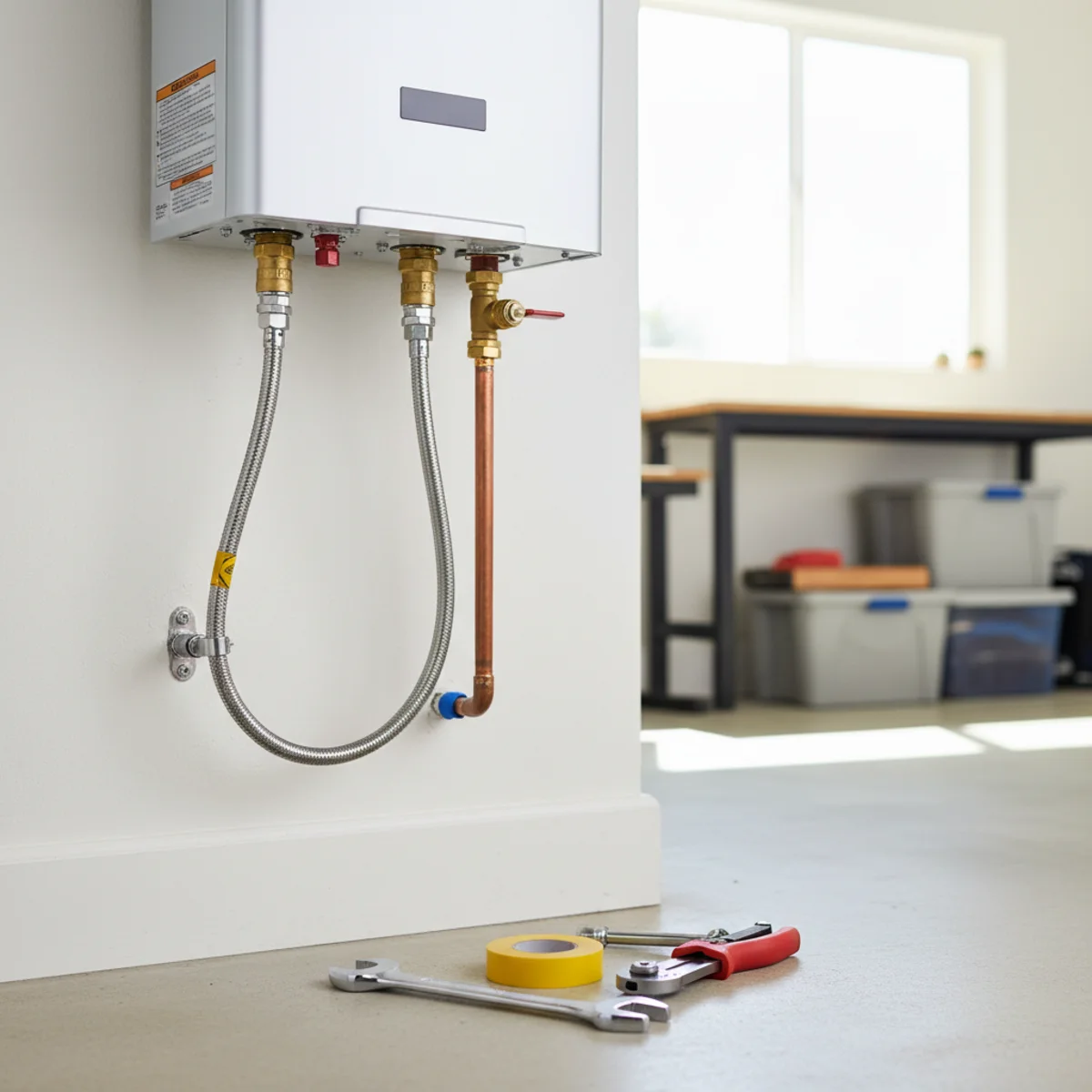
The flexible connectors that join your gas appliances to the rigid gas line are a common point of failure. These braided stainless-steel or aluminum accordion-style lines can crack, kink, or corrode over time -- particularly older uncoated aluminum connectors, which California prohibited in new installations after a series of earthquake-related failures in the 1990s.
Inspect the flexible connector behind your stove, below your water heater, and at the back of your dryer every 2-3 years. Look for kinks, corrosion, cracking, or scorch marks. If a connector is more than 10 years old or shows any damage, have it replaced by a licensed plumber. Never use a kinked flex connector -- the internal metal can fracture and cause a leak even when the exterior looks intact.
Local tip: After any significant earthquake -- even a minor one -- inspect all appliance flex connectors before resuming normal use. Seismic movement is a leading cause of flex connector damage.
Outdoor Gas Lines and Digging Safety
Many Moreno Valley homes have buried gas lines serving outdoor grills, pool heaters, fire pits, or detached garages. These lines are typically buried 12-18 inches below grade and marked (if at all) with a survey flag at installation -- but those markers do not last. Before any digging project in your yard -- irrigation, landscaping, fence post installation, garden beds -- call 811 (California's Dig Safe line) at least two business days in advance. This is free, required by law, and results in a utility crew marking all buried lines at your property.
Never assume you know where buried gas lines run. Even lines that served appliances that were removed decades ago may still be in the ground and pressurized. A shovel through a buried gas line is a life-threatening emergency.
Why Gas Line Work Requires a Licensed Pro
Gas line installation, modification, and repair is not a DIY project in California. State law requires that gas line work be performed by a licensed contractor, and local building departments require permits for most gas line modifications. This is not bureaucratic friction -- it is a meaningful safety requirement. An improperly installed gas fitting can leak at a level too small to smell but large enough to accumulate and ignite.
At Moreno Valley Plumbing Pros, our technicians are licensed and insured to perform gas line repairs, new gas line installation, and appliance connection work. We handle gas line repairs for water heaters, stoves, dryers, and whole-home gas systems throughout Moreno Valley and Riverside County. If you have any concern about your gas system -- a connector you are not sure about, a fitting you want checked, or a line you want added for a new appliance -- call (207) 419-2600 for same-day service when available.
Need a plumber in Moreno Valley?
We're a local team ready to help with fast, reliable plumbing and upfront pricing. Call (207) 419-2600 or request service online.
Local plumbing help: Plumbing in Moreno Valley.