A water heater failure ranks among the most disruptive home plumbing emergencies -- it affects showers, dishes, and laundry simultaneously, and an active leak can damage flooring, walls, and stored belongings in a garage or utility room fast. In Moreno Valley's warm climate, water heaters in garages and exterior utility closets experience significant temperature swings that accelerate tank corrosion and component wear, making failures somewhat more common than in temperate climates.
This guide covers the most common water heater emergencies, what to do immediately when they occur, and which situations require a licensed plumber right away versus a scheduled repair visit. For water heater emergencies in Moreno Valley, call Moreno Valley Plumbing Pros at (207) 419-2600 -- we provide emergency plumbing support when you need it most and same-day service when available.
Suddenly No Hot Water
When hot water disappears abruptly, the diagnostic approach depends on your heater type. For a gas water heater, check the pilot light. Modern units have electronic ignition, but older units have a standing pilot flame. If the pilot is out, the unit will have re-light instructions on the label -- follow them carefully. If the pilot will not stay lit after re-lighting, the thermocouple (a safety sensor) is likely faulty and needs replacement.
For electric water heaters, check the circuit breaker first. Electric water heaters typically run on a 240-volt dedicated circuit. If the breaker has tripped, reset it once. If it trips again immediately, there is likely a wiring or element fault that requires a licensed plumber or electrician. If the breaker is fine, the upper or lower heating element may have failed and needs replacement.
Local tip: Before calling a plumber for no hot water, give a tank water heater 1-2 hours after any repairs or resets to fully recover. A 40-gallon tank takes roughly 30-60 minutes to reheat fully from cold.
Water Heater Actively Leaking
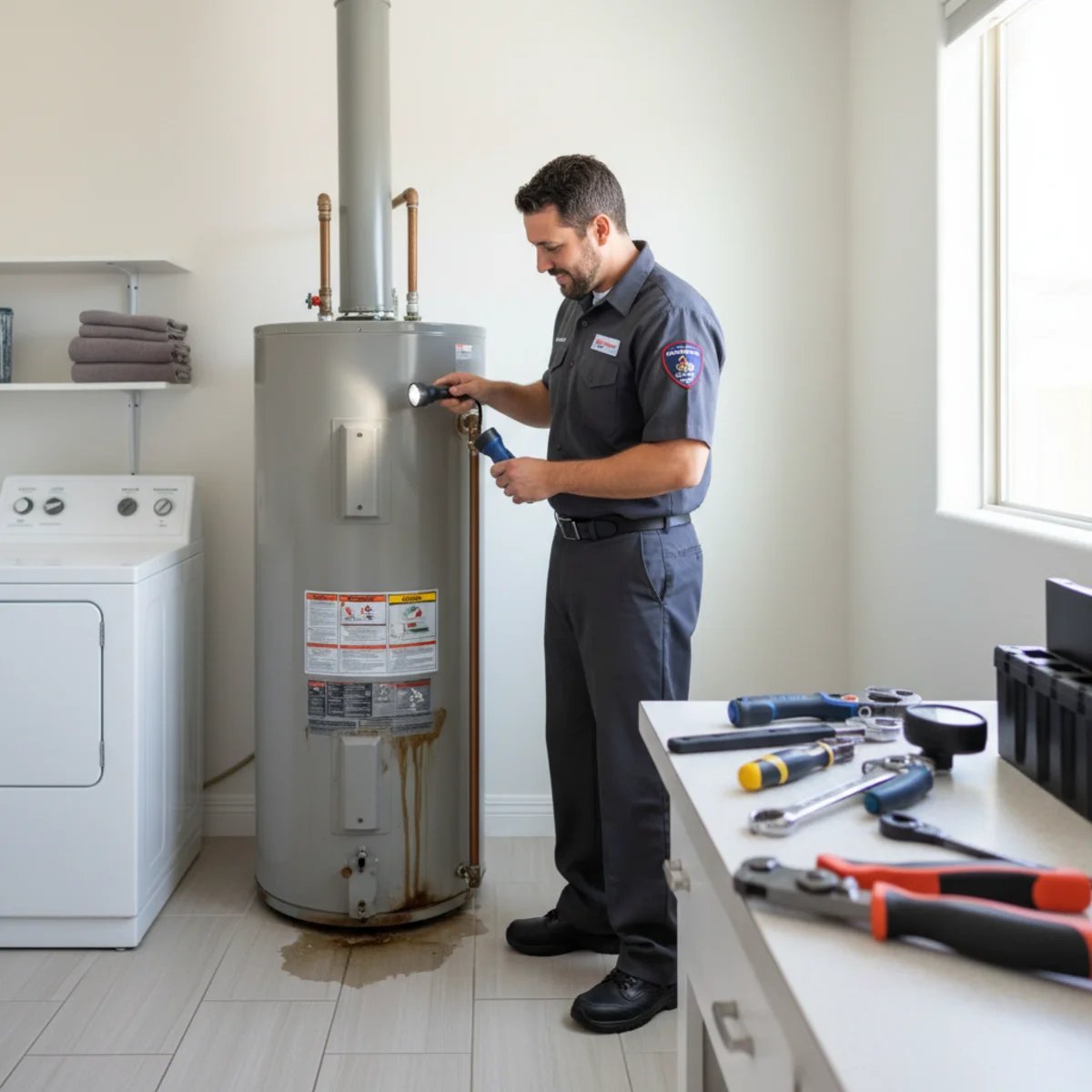
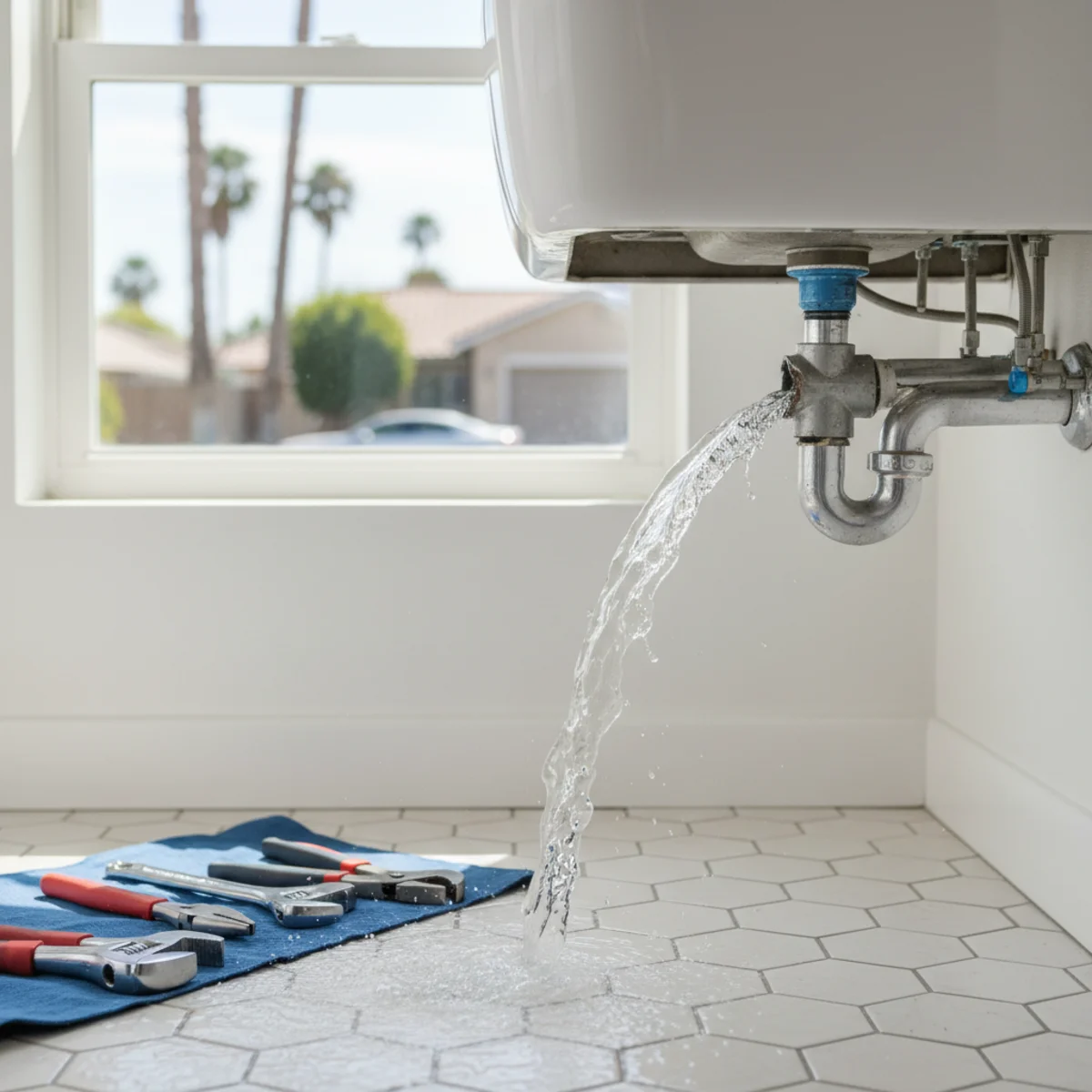
An active water heater leak requires immediate action because water damage compounds quickly. The first step is to identify the leak source. A drip from the pressure relief valve (TPR valve) on the side of the tank may indicate the valve is releasing excess pressure -- which can be normal under certain conditions but should be evaluated by a plumber promptly. A drip from a pipe connection at the top of the tank (the cold inlet or hot outlet) is usually a fitting that has corroded or loosened and can often be repaired without tank replacement.
A leak from the base of the tank -- particularly a visible wet spot under the tank that is not from condensation -- almost always indicates a cracked or corroded tank. Tank failures cannot be repaired. Turn off the cold water supply to the heater (the valve on the cold-water inlet line at the top of the tank), shut off the gas or breaker, and call a plumber immediately. Do not wait -- a compromised tank can fail completely and rapidly.
- Shut off the cold water supply inlet valve at the top of the tank
- Turn off gas supply or breaker depending on heater type
- Do not attempt to use a leaking tank further
- Place towels or a bucket to protect flooring while waiting
- Call (207) 419-2600 for emergency plumbing support
Rumbling or Popping Sounds
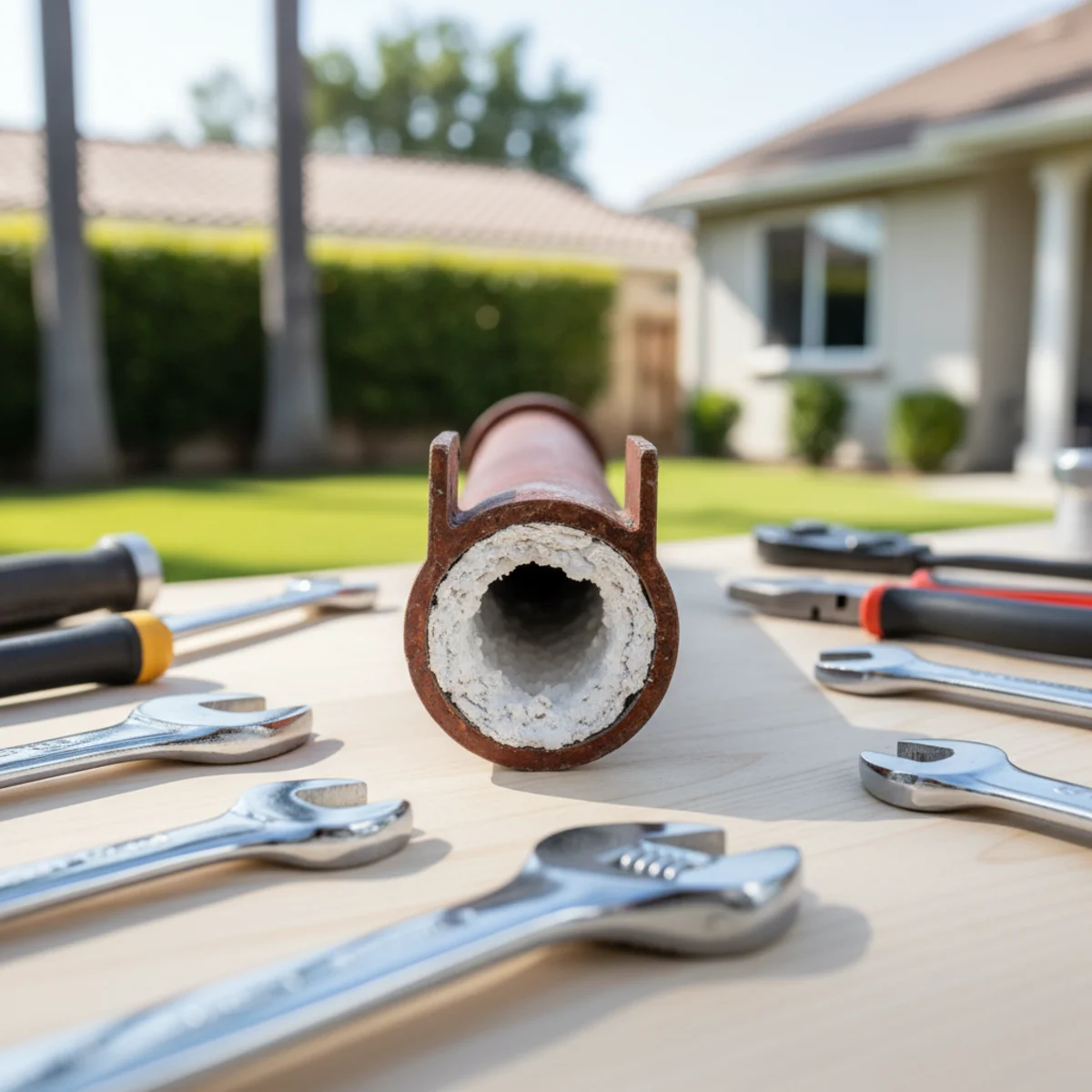
A water heater that produces loud rumbling, popping, or banging sounds during heating is telling you that sediment -- largely calcium carbonate from Moreno Valley's hard water -- has accumulated at the bottom of the tank. The heating element or burner heats water that is trapped beneath the sediment layer, and the sounds are steam bubbles erupting through the crust.
This is not immediately dangerous, but it is damaging. The sediment layer forces the tank to overheat at the base, accelerating corrosion and leading to premature failure. Annual tank flushing -- or installation of a water softener upstream -- dramatically reduces sediment accumulation. If a tank has never been flushed and is more than 5-7 years old, a plumber should assess it before flushing, as sediment can sometimes be holding a corroded tank bottom together.
Rusty or Discolored Hot Water
If your hot water is rust-colored or has a metallic taste while cold water looks clear, the problem is inside the water heater tank. Tank corrosion is occurring, and the sacrificial anode rod that is supposed to absorb that corrosion has been depleted. Anode rods need replacement every 3-5 years -- an interval most homeowners are unaware of.
If flushing the tank and replacing the anode rod does not resolve the discoloration within a week, the tank lining has likely corroded through and tank replacement is needed. Do not continue using a corroding tank long-term -- the rust contamination affects water quality and the structural integrity of the tank is compromised.
Rotten Egg Smell from Hot Water
A sulfur or rotten-egg odor specifically in hot water -- not cold -- is caused by sulfate-reducing bacteria reacting with the magnesium anode rod inside the tank. This is a water quality issue, not a gas leak (though if you smell sulfur throughout the home and not just at the hot tap, treat it as a gas leak and act accordingly). The bacterial reaction produces hydrogen sulfide gas, which causes the smell.
Solutions include replacing the magnesium anode rod with an aluminum/zinc rod, flushing and disinfecting the tank with a diluted hydrogen peroxide solution, or -- for persistent cases -- installing a whole-home water treatment system. Call a licensed plumber to perform the anode replacement and tank flush correctly.
Pressure Relief Valve Concerns
The temperature and pressure relief (TPR) valve is the most important safety device on your water heater. It opens automatically if temperature inside the tank exceeds 210 degrees Fahrenheit or pressure exceeds 150 PSI -- conditions that can otherwise lead to a catastrophic tank rupture. A TPR valve that drips occasionally may simply be releasing excess pressure due to thermal expansion in a closed plumbing system -- this is actually normal functioning but should be evaluated.
Never cap or block a TPR valve -- ever. If yours is dripping or has begun releasing water that did not previously occur, call a plumber to evaluate whether you need a thermal expansion tank or a valve replacement. A functioning TPR valve is a code requirement and is not optional.
When to Call for Emergency Service
Call immediately for emergency plumbing support when: the water heater is leaking from the base of the tank, when the TPR valve is releasing a significant flow of water (not just dripping), when you smell gas near a gas water heater, or when there is any sign of scorching, overheating, or visible damage to the unit. These situations are not 'schedule for next week' problems.
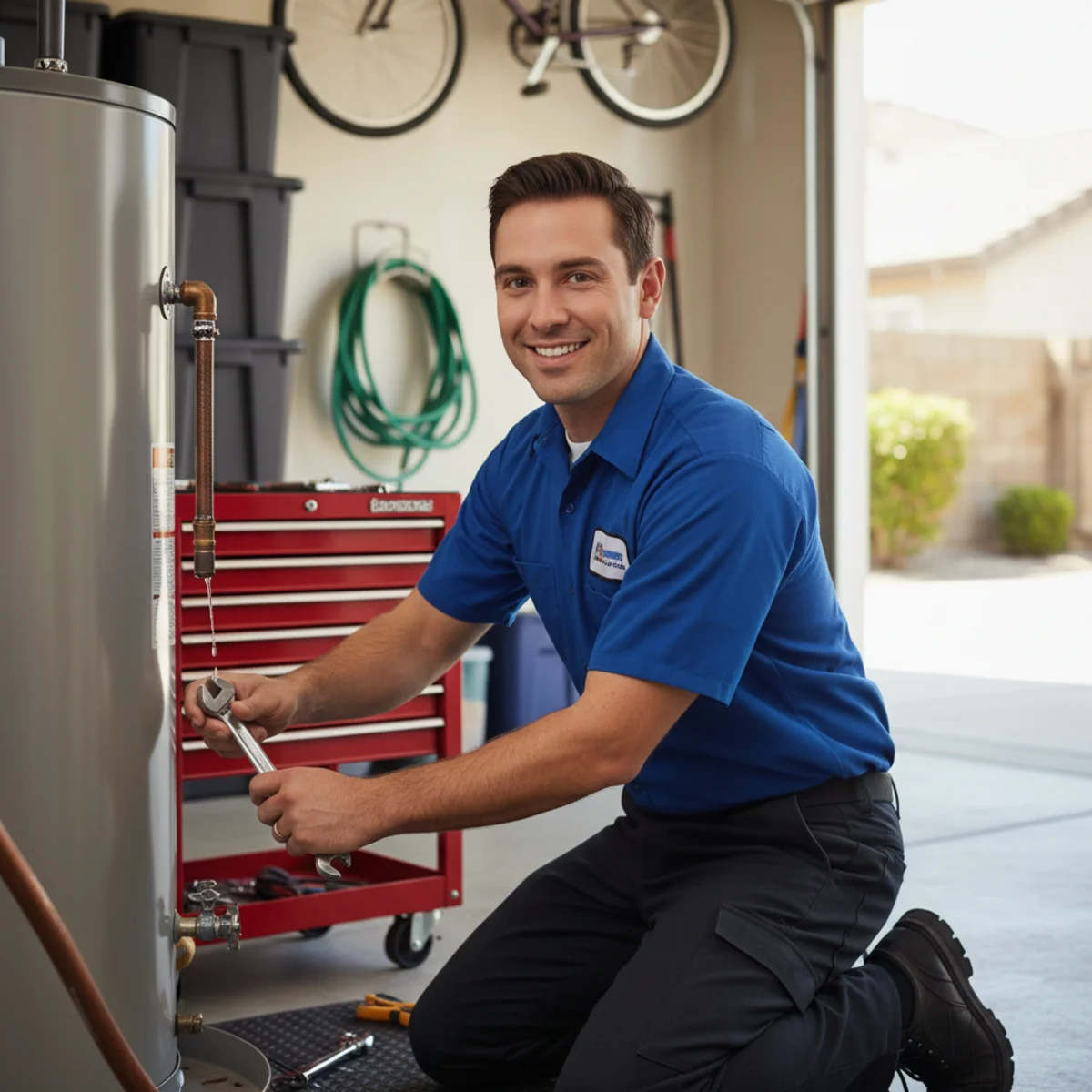
At Moreno Valley Plumbing Pros, we stock common water heater sizes for same-day installation when available, covering both gas and electric models. We serve residential customers throughout Moreno Valley, Sunnymead, Edgemont, and Rancho Belago with licensed and insured technicians. Call (207) 419-2600 for immediate assistance -- day or night, we provide emergency plumbing support for water heater failures and active leaks.
Need a plumber in Moreno Valley?
We're a local team ready to help with fast, reliable plumbing and upfront pricing. Call (207) 419-2600 or request service online.
Local plumbing help: Plumbing in Moreno Valley.