The garbage disposal is one of the hardest-working fixtures in a Moreno Valley kitchen, and also one of the most misunderstood. Most homeowners do not think about it until it stops working -- and when it does, the timing is usually the worst possible. A jammed or leaking disposal can disrupt your kitchen routine fast, and ignoring a leak under the sink can lead to cabinet damage and mold growth.
The good news is that several common disposal problems have simple fixes you can do yourself. Others require a licensed plumber, especially when the drain line or sink connections are involved. This guide walks through the most frequent garbage disposal issues, what causes them, and when to call Moreno Valley Plumbing Pros at (207) 419-2600.
Disposal Won't Turn On
When you flip the switch and nothing happens -- no hum, no spin, no sound at all -- the disposal has likely tripped its built-in thermal overload. This happens when the unit overheats, usually after processing something too tough or running too long. Look under the sink at the bottom of the disposal unit. There is a small reset button, typically red or black. Press it firmly until you feel it click, then try the switch again.
If the reset button does not fix it, check your electrical panel for a tripped breaker. Disposals run on a dedicated 15- or 20-amp circuit in most homes. If the breaker is fine and the reset does not help, the motor itself may have failed -- at that point, the unit usually needs replacement.
Local tip: Always turn off the disposal switch before reaching under the sink for any reason. The reset button is on the exterior of the unit -- you never need to put your hand inside.
Humming But Not Spinning
A disposal that hums when switched on but does not spin has a jammed grinding plate. The motor is receiving power but cannot turn because something -- a fruit pit, a small utensil, accumulated food debris -- is wedged between the grinding plate and the shredder ring. Leave the switch off and unplug the unit or cut power at the breaker.
Most disposals include a hex wrench port at the very bottom center of the unit. Insert a 1/4-inch Allen wrench (often included with the disposal when new) and manually crank the plate back and forth until it moves freely. Then use disposal tongs or needle-nose pliers to remove whatever was causing the jam. Never reach into the disposal with your hand, even when unplugged.
- Turn off and unplug the unit before any jam clearing
- Use the hex port at the bottom to free the grinding plate
- Remove debris with tongs -- never with bare hands
- Press the reset button after clearing the jam
- Run cold water and turn the disposal on briefly to confirm it is working
Disposal Leaking Under the Sink
Leaks from a garbage disposal fall into three locations, each with a different cause. A leak from the top of the unit -- where it connects to the sink flange -- usually means the plumber's putty around the mounting ring has dried out or the mounting bolts have loosened. A leak from the side typically points to a failed dishwasher drain hose connection or a cracked drain elbow. A leak from the bottom of the unit means an internal seal has failed -- and that almost always means it is time for a new disposal.
Even a slow disposal leak is worth fixing promptly. Water dripping inside a sink cabinet warps wood shelving and creates a mold-friendly environment in as little as 48 hours, especially in Moreno Valley's warm climate.
Local tip: Dry out the area under the sink completely, then run the disposal with water and watch closely where the drip originates. This pinpoints the leak source before you call a plumber.
Bad Odors From the Disposal
A foul smell from the disposal almost always means food residue is coating the underside of the rubber splash guard, the grinding chamber walls, or the drain elbow. Grease, onion skins, and fibrous vegetables like celery tend to accumulate rather than flush through completely.
To eliminate disposal odors: first, cut the power. Use a dish brush or an old toothbrush to scrub under the rubber splash guard -- the flaps that cover the opening. Then restore power and run the disposal while feeding in a handful of ice cubes followed by a few lemon or orange wedges. The ice scrubs the grinding chamber, and the citrus oils cut grease and leave a fresh scent. Do this monthly as a maintenance habit.
Slow Draining After Using the Disposal
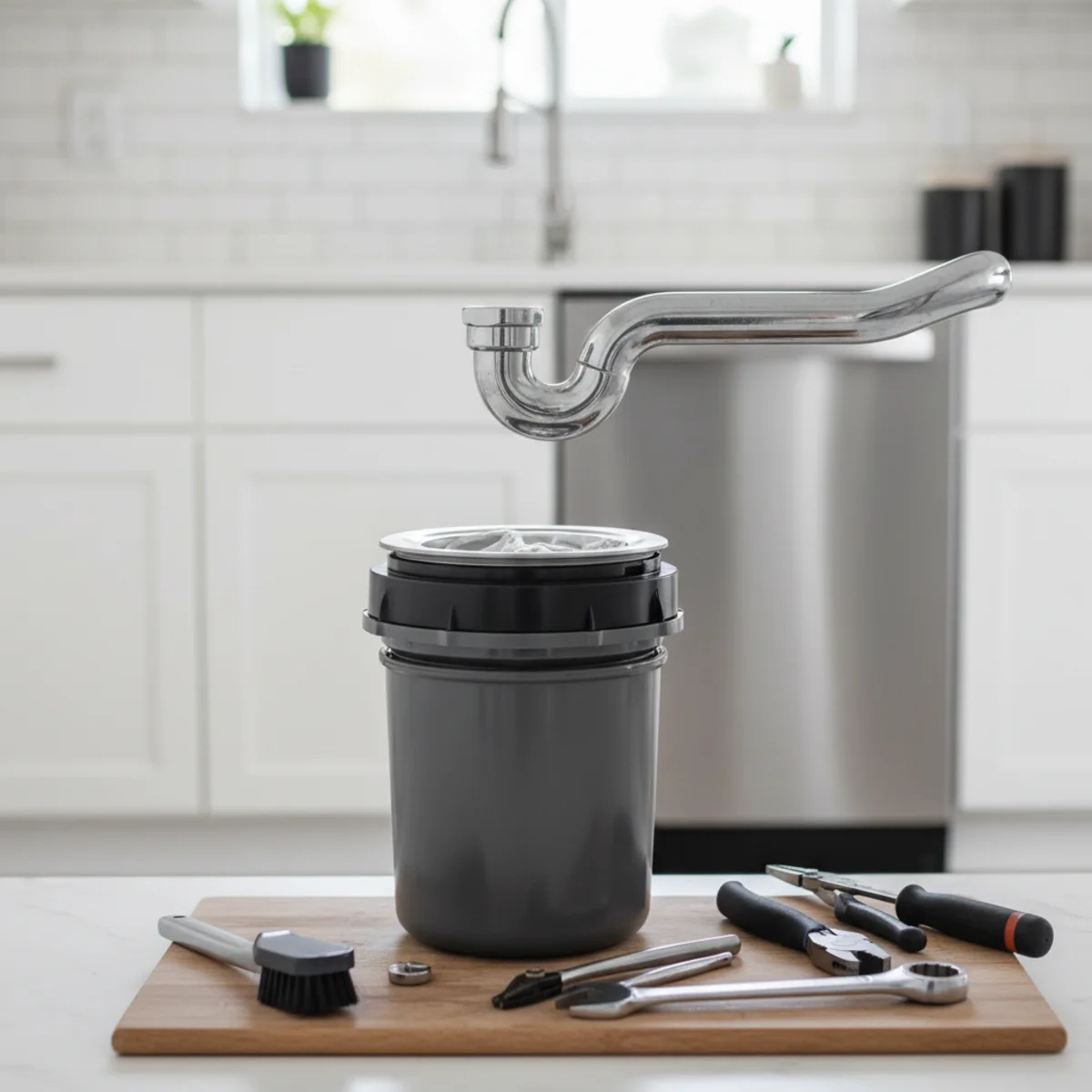
If water backs up into the sink or drains slowly after running the disposal, the clog is most likely in the P-trap or drain elbow immediately downstream of the unit -- not in the disposal itself. Grease and fine food particles build up in those bends over time, especially in kitchens that regularly process oily or starchy foods.
This is a common kitchen plumbing issue in Moreno Valley homes, particularly in older neighborhoods where pipe interiors have years of buildup. A plumber can clear the drain line quickly with a snake or hydro-jet, restoring full flow. If the slow drain persists after clearing the trap, the blockage may be further down the line and require a camera inspection.
When to Replace Your Disposal
Most garbage disposals have a useful life of 8-15 years. Signs it is time for a replacement rather than another repair include: the unit leaks from the bottom, the motor hums but cannot be unjammed after multiple attempts, it requires frequent resets, it makes loud rattling or grinding sounds even when empty, or it is more than 12 years old and showing multiple issues at once.
Upgrading to a newer 3/4 or 1 HP model gives you significantly better grinding power -- particularly useful for Moreno Valley households that cook frequently. Our team at Moreno Valley Plumbing Pros handles garbage disposal installation and kitchen plumbing connections with licensed and insured technicians. Call (207) 419-2600 for same-day service when available.
Need a plumber in Moreno Valley?
We're a local team ready to help with fast, reliable plumbing and upfront pricing. Call (207) 419-2600 or request service online.
Local plumbing help: Plumbing in Moreno Valley.